Quotessence
Home / Quotes / Quote by Joshua Bell

Quote by Joshua Bell

“Social media puts us inside our phones and our computers and our headphones, and we're not connecting so much with our outside environment. Even when people go to the Grand Canyon they're more concerned about the selfies than actually looking at the canyon. I see it with my own kids - the addiction to needing things fast, never pausing to just see what's around us and connect with our fellow human beings in real time.”

Quote by Joshua Bell

Author
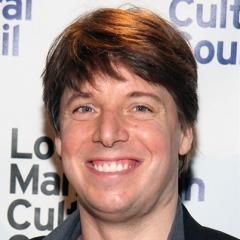
Joshua Bell
Joshua Bell

Joshua Bell is an internationally renowned violinist, born on December 9, 1967. Since his childhood, Bell has shown extraordinary musical talent and has become a significant figure in the classical music world. His unique playing style and exquisite technique have won him the admiration of audiences worldwide. more

You May Also Like

“I think if there's ever been a time we need music more, it's now. For our kids, it teaches you to take time, to listen, to work together, to listen to other people, and to use your brain. That's why classical music doesn't work when you throw it at people in a subway platform while they're rushing to work. Classical music is something that needs to be contemplated, you have to be completely present with an active mind that's working. It's not background music.”

“If you come from a working-class background, you can't afford to write full time, because you're just not being paid. Basically, all my arguments come down to Marxist doctrine: The world is shaped by money, so the only voices you'll hear are the ones with money behind them. But thankfully, culture and cool are some things that circumvent money, because if you're cool, people will want to give you money - suddenly you shape the market and people start coming to you. Which is why culture has always been a traditional way out for working-class people.”

“Culture is so much faster and so much more effective than anything else. If you go on a march, you march for a couple hours and it might be on the news that night, but if it happens culturally, it happens forever. Everywhere in the world, that TV show is being played. Someone is downloading it illegally. It's blowing someone else's mind. Culture marches so quickly, and it's a language we all understand.”

“I'm more critical of my songwriting than anybody, but I've worked really hard in the last five to 10 years to improve. I didn't take it all that seriously when I started. It was a little bit of a stigma to being a songwriter or a folkie back then. I did a lot of send-ups of sensitive singer-songwriter stuff when I was starting out, which limited my development as a songwriter in a way. I wasn't really fully given license to explore that until the mid-90s. I'm still working on it; I'm a little bit of a late bloomer.”

“Maybe certain aspects of what I was doing were reacting against what was happening or what people said, too. That's something that happens when you're starting out. After some time goes by and you get a little perspective, you realize that you don't need to react. You can just carry on with what you're doing. That took me a long time figure out; I've only gotten to that point in the last five or 10 years.”

“There are certain records from the 80s and early 90s that you love because the songs are great, but you don't go to them as an example of great production. Over the last 20 years, myself and a lot of other musicians my age have tried to discover things in 50s, 60s, and 70s recording techniques that were lost or discarded. We've all been trying to crack this code. It's been an important period in the last 15 years, reclaiming some of those lost approaches to making records.”