Quotessence
Home / Quotes / Quote by Dalai Lama

Quote by Dalai Lama

“From a Buddhist point of view, the actual experience of death is very important. Although how or where we will be reborn is generally dependent on karmic forces, our state of mind at the time of death can influence the quality of our next rebirth. So at the moment of death, in spite of the great variety of karmas we have accumulated, if we make a special effort to generate a virtuous state of mind, we may strengthen and activate a virtuous karma, and so bring about a happy rebirth.”

Quote by Dalai Lama

Author
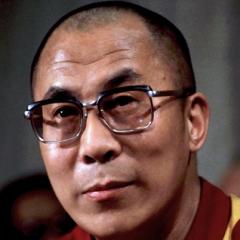
Dalai Lama
Dalai Lama

The Dalai Lama (born July 6, 1935) is the 14th Dalai Lama, a prominent religious leader of Tibetan Buddhism's Gelug school. Born as Tenzin Gyatso in Qinghai Province, China, he is recognized as an incarnation of Avalokiteshvara. He advocates non-violence, peace, and interfaith dialogue, and was awarded the Nobel Peace Prize in 1989. However, his political activities are viewed by the Chinese government as separatist, and he has lived in exile in India since 1959. His influence remains controversial, blending religious authority with political dissent. more

You May Also Like

“As a Buddhist, I view death as a normal process, a reality that I accept will occur as long as I remain in this earthly existence. Knowing that I cannot escape it, I see no point in worrying about it. I tend to think of death as being like changing your clothes when they are old and worn out, rather than as some final end. Yet death is unpredictable: We do not know when or how it will take place. So it is only sensible to take certain precautions before it actually happens.”

“Death is a vast mystery, but there are two things we can say about it: It is absolutely certain that we will die, and it is uncertain when or how we will die. The only surety we have, then, is this uncertainty about the hour of our death, which we seize on as the excuse to postpone facing death directly. We are like children who cover their eyes in a game of hide and seek and think that no one can see them.”

“Why exactly are we so frightened of death that we avoid looking at it altogether? Somewhere, deep down, we know we cannot avoid facing death forever. We know, in Milarepa's words: "This thing called 'corpse' we dread so much is living with us here and now."”

“We often wonder: "How will I be when I die?" The answer to that is that whatever state of mind we are in now, whatever kind of person we are now, that's what we will be like at the moment of death, if we do not change. This is why it is so absolutely important to use this lifetime to purify our mindstream, and so our basic being and character, while we can.”

“Switch on the television or glance at the newspaper: You will see death everywhere. Yet, did the victims of those plane crashes and car accidents expect to die? They took life for granted, as we do. How often do we hear stories of people whom we know, or even friends, who died unexpectedly? We don't even have to be ill to die: Our bodies can suddenly break down and go out of order, just like our cars. We can be quite well one day, then fall sick and die the next.”

“At every moment in our lives we need compassion, but what more urgent moment could there be than when we are dying? What more wonderful and consoling gift could you give to dying people than the knowledge that they are being prayed for, and that you are taking on their suffering and purifying their negative karma through your practice for them?”

“I remember how people would often come to see my master Jamyang Khyentse simply to ask for his guidance for the moment of death. He was so loved and revered throughout Tibet, especially in the eastern province of Kham, that some would travel for months on end to meet him and get his blessing just once before they died. All my masters would give this as their advice, for this is the essence of what is needed as you come to die: "Be free of attachment and aversion. Keep your mind pure. And unite your mind with Buddha."”