Quotessence
Home / Quotes / Quote by Saul Bellow

Quote by Saul Bellow

Author

Saul Bellow
Saul Bellow

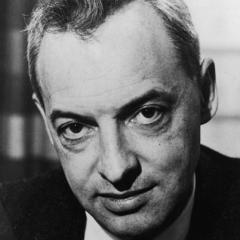
Saul Bellow, born on June 10, 1915, in Canada, was an American Jewish writer. His works are known for their profound psychological insights and unique sense of humor. Bellow won the Nobel Prize in Literature. His representative works include 'Herzog', 'The Adventures of Augie March', and 'Henderson the Rain King'. more

You May Also Like

“I didn't know what hate felt like, not the hate that comes after love. It's huge and desperate and it longs to be proved wrong. And every day it's proved right it grows a little more monstrous. If the love was passion, the hate will be obsession. A need to see the once-loved weak and cowed beneath pity. Disgust is close and dignity is far away. The hate is not only for the once loved, it's for yourself too; how could you ever have loved this?”

“For, like almost everyone else in our country, I started out with my share of optimism. I believed in hard work and progress and action, but now, after first being 'for' society and then 'against' it, I assign myself no rank or any limit, and such an attitude is very much against the trend of the times. But my world has become one of infinite possibilities. What a phrase - still it's a good phrase and a good view of life, and a man shouldn't accept any other; that much I've learned underground. Until some gang succeeds in putting the world in a strait jacket, its definition is possibility.”

“We want to believe. Young students try to believe in older authors, constituents try to believe in their Congressmen, countries try to believe in their statesmen, but they can't. Too many voices, too much scattered, illogical ill-considered criticism.”

“I cannot believe that the purpose of life is to be happy. I think the purpose of life is to be useful, to be responsible, to be compassionate. It is, above all to matter, to count, to stand for something, to have made some difference that you lived at all.”

“In politics as in religion, my tenets are few and simple. The leading one of which, and indeed that which embraces most others, is to be honest and just ourselves and to exact it from others, meddling as little as possible in their affairs where our own are not involved. If this maxim was generally adopted, wars would cease and our swords would soon be converted into reap hooks and our harvests be more peaceful, abundant, and happy.”

“But the fact of it was that I liked it out there, a ruin devoid of human vanities, clean of human illusions, an empty place reclaimed by the weather where a woman plays an organ to stop the wind's whining and an old man plays ball with a dog named Duke. I could tell you that I came back because I had promises to keep, but maybe it was because nobody asked me to stay.”