Quotessence
Home / Quotes / Quote by Ha-Joon Chang

Quote by Ha-Joon Chang

“The focus on the market has made most economists neglect vast areas of our economic life, with significant negative consequences for our well-being. The neglect of production at the expense of exchange has made policy-makers in some countries overly complacent about the decline of their manufacturing industries. The view of individuals as consumers, rather than producers, has led to the neglect of issues such as the quality of work (e.g., how interesting it is, how safe it is, how stressful it is and even how oppressive it is) and work-life balance. The disregard of these aspects of economic life partly explains why most people in the rich countries don’t feel more fulfilled despite consuming the greatest ever quantities of material goods and services. The economy is much bigger than the market. We will not be able to build a good economy — or a good society — unless we look at the vast expanse beyond the market.”

Quote by Ha-Joon Chang

Work

Economics: The User's Guide

Browse quotes and source details for this work. more

Author
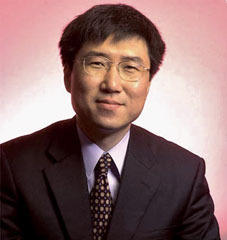
Ha-Joon Chang
Ha-Joon Chang

Ha-Joon Chang is a Korean-born economist known for his research on development economics and issues of globalization. His works, such as '23 Billion People's Challenge' and 'Kicking Away the Ladder', challenge traditional development theories and propose new models of development. more

You May Also Like

“Self-centrism creates another problem on the response side. The problem with commercially motivated technological change is that if it does not make good business, the idea does not see its growth. Sanitation and clean water is still a problem in localities where everyone has 4G connection and mobile wallet accounts. Commercially motivated research is more intensely pursued than socially urgent ones. Technological improvements to ease sanitation, bring clean water and achieve recycling are given less attention than telecommunication and digital financial services which are commercially more profitable ventures.”

“Education geared to industry demands has also got into the trap of producing commercial technologists for corporations. These corporations are not built for social responsibility in free-market capitalism. Milton Friedman said the biggest and only responsibility of a corporation is to increase shareholders’ wealth. If these corporations do research and find a vaccine eventually that costs $1,000, then those who are not able to afford it would be regarded by mainstream economists as having less willingness to pay. For the poor, it is not a choice, but a helpless situation. But, poor having less budget for essential needs is a problem that we do not start our economics textbooks with.”

“In the earlier era, the subject of economics was geared to human needs. Now, the prime emphasis is on market behaviour and market outcomes based on choices under uncertainty and scarcity. The emphasis on choice behaviour subtly and inadvertently makes economics and most of its contents largely irrelevant for poor people.”

“Mankiw’s famous quote was ‘People react to incentives, all else is just explanation’. However, poor people are helpless. They do not have or face a willingness to pay choice in helpless scenarios. A literal application of definition of demand would imply that the poor people do not have demand for the essential goods. Their wants are not backed up by purchasing power. Economics does not differentiate between essential and non-essential wants. If a rich person demands golf course in a locality near a big population of homeless people, then, the golf course will be built first if he can afford it. Are poor willing to give fewer dollar votes by choice to buy the essential needs? Is it their conscious and sovereign decision?”

“All too often people say to artists, 'To be an artist is fine if your art can be used for evangelism.' And art has often become a tool for evangelism. But let's be precise. As such there is nothing against this. But we must be aware that art cannot be used to show the validity of Christianity; it should rather be the reverse. Christianity is true; things and actions and human endeavor only get their meaning from their relationship to God; if Christ came to make us human, the humanity and the reality of art find their foundation in him. So art should not be used to preach even if it can help. Yet there is another way that art can be or is meaningful.”