Quotessence
Home / Quotes / Quote by Jim Beaver

Quote by Jim Beaver

“How can it be that there is such a colossal gap between what we think we know about grief and mourning and what we actually find out when it comes to us?”

Quote by Jim Beaver

Work

Life's That Way

This book delves into the multifaceted nature of human existence, examining the intricate tapestry of relationships and the unexpected turns life can take. more
Author

Jim Beaver
Jim Beaver

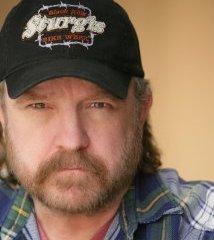
Jim Beaver, born on August 12, 1950, is an accomplished American film actor. He is recognized for his distinctive acting skills and extensive experience in various film and television projects. more

You May Also Like

“What is dying? I am standing on the seashore. A ship sails to the morning breeze and starts for the ocean. She is an object and I stand watching her Till at last she fades from the horizon, And someone at my side says, “She is gone!” Gone where? Gone from my sight, that is all; She is just as large in the masts, hull and spars as she was when I saw her, And just as able to bear her load of living freight to its destination. The diminished size and total loss of sight is in me, not in her; And just at the moment when someone at my side says, “She is gone”, There are others who are watching her coming, And other voices take up a glad shout, “There she comes” – and that is dying.”

“The size and height of the tree determines how heavily the ground will shake when it falls. The cassava tree falls and not even the pests in the forest are aware. The baobab tree falls and the whole forest looks empty! Such is human life!”

“Grief turns out to be a place none of us know until we reach it...We might expect that we will be prostrate, inconsolable, crazy with loss. We do not expect to be literally crazy, cool customers who believe that their husband is about to return and need his shoes. In the version of grief we imagine, the model will be 'healing.' A Certain forward movement will prevail. The worst days will be the earliest days. We imagine that the moment to most severely test us will be the funeral, after which this hypothetical healing will take place. When we anticipate the funeral we wonder about failing to 'get through it,' rise to the occasion, exhibit the 'strength' that invariably gets mentioned as the correct response to death. We anticipate needing to steel ourselves for the moment: will I be able to greet people, will I be able to leave the scene, will I be able even to get dressed that day? We have no way of knowing that this will not be the issue. We have no way of knowing that the funeral itself will be anodyne, a kind of narcotic regression in which we are wrapped in the care of others and the gravity and meaning of the occasion. Nor can we know ahead of the fact the unending absence that follows, the void, the very opposite of meaning, the relentless succession of moments during which we will confront the experience of meaninglessness itself.”

“I have more than once tried to analyse this apparently deliberate form of self-torture that seems common to so many people in face of the extinction of a valued life, human or animal, and it springs, I think, from a negation of death, as if by summoning and arranging these subjective images one were in some way cheating the objective fact. It is, I believe, an entirely instinctive process, and the distress it brings with it is an incidental, a by-product, rather than a masochistic end.”

“Somewhere in the notes Estraven wrote during our trek across the Gobrin Ice he wonders why his companion is ashamed to cry. I could have told him even then that it was not shame so much as fear. Now I went on through the Sinoth Valley, through the evening of his death, into the cold country that lies beyond fear. There I found you can weep all you like, but there's no good in it.”