Quotessence
Home / Quotes / Quote by Joseph John Thomson

Quote by Joseph John Thomson

“His work was so great that it cannot be compassed in a few words. His death is one of the greatest losses ever to occur to British science. {Describing Ernest Rutherford upon his death at age 66. Thomson, then 80 years old, was once his teacher.}”

Quote by Joseph John Thomson

Author
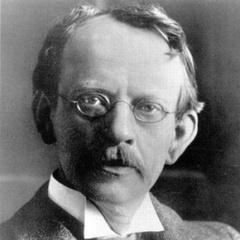
Joseph John Thomson
Joseph John Thomson

Joseph John Thomson was a renowned physicist known for his contributions to atomic theory and the discovery of the electron. He proposed the 'plum pudding model' to describe atomic structure and discovered the electron, laying the foundation for modern physics. more

You May Also Like

“Somewhere in the notes Estraven wrote during our trek across the Gobrin Ice he wonders why his companion is ashamed to cry. I could have told him even then that it was not shame so much as fear. Now I went on through the Sinoth Valley, through the evening of his death, into the cold country that lies beyond fear. There I found you can weep all you like, but there's no good in it.”

“Afghan Girl Ice blue eyes that look to the morning sky as I knit the pieces and remnants of my life. I have No books, no paper, no pencils, and no black boards. I look at the holes in my life as I see the hills of the Appalachians that echo. I think to myself, who will I marry? Is my life-like Pari? These strings please come together. Snowflakes give me hope, and my dreams dance all around me. I‘ll put another log on the fire. I watch the brown paper bag over the broken glass pane letting the cold wind in; I’ll take some of these remnants and stuff it. These strings are come together. Mama told me that life would be hard. I bartered for flour the other day, and the chickens ain’t laying no eggs. I struggle with life and these strings. My hands are worn and tired. Now, I have granny square hands. I am unclean, unblemished, and finished, Afghan girl.”

“There’s an interesting story about Abraham Lincoln. During the American Civil War he signed an order transferring certain regiments, but Secretary of War Edwin Stanton refused to execute it, calling the president a fool. When Lincoln heard he replied, ‘If Stanton said I’m a fool then I must be, for he’s nearly always right, and he says what he thinks. I’ll step over and see for myself.’ He did, and when Stanton convinced him the order was in error, Lincoln quietly withdrew it. Part of Lincoln’s greatness lay in his ability to rise above pettiness, ego, and sensitivity to other people’s opinions. He wasn’t easily offended. He welcomed criticism, and in doing so demonstrated one of the strengths of a truly great person: humility. So, have you been criticised? Make it a time to learn, not lose.”

“To each of the mourners outside in the lane, I would be no more than a pale face glimpsed for a moment behind the glass. I wished I could smile at each of them, but I knew I must not, since a grinning mug would spoil their memories of this sad occasion. We were all of us mourners overtaken by the moment: It was not ours to shape. We must give ourselves over to being the Grieving Family, upon whom others must be permitted to shower sympathy. All of this I knew without ever having been told. It had somehow been born in my blood.”