Quotessence
Home / Quotes / Quote by Johann Gottfried Herder

Quote by Johann Gottfried Herder

“Calmly take what ill betideth; Patience wins the crown at length: Rich repayment him abideth Who endures in quiet strength. Brave the tamer of the lion; Brave whom conquered kingdoms praise; Bravest he who rules his passions, Who his own impatience sways.”

Quote by Johann Gottfried Herder

Author
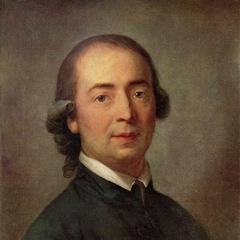
Johann Gottfried Herder

Johann Gottfried Herder was a German philosopher, born on August 25, 1744, in Halle, Germany, and died on December 18, 1803. He was a significant figure in the German Enlightenment and had a profound impact on German literature and philosophy. more

You May Also Like

“I don't recall that I have said and I don't think that I really feel that we need a world government. We need governments of the world that work together and collaborate. But, I can't imagine that there would be any likelihood or even that it would be desirable to have a single government elected by the people of the world.”

“Although the problem of transmuting chemical elements into each other is much older than a satisfactory definition of the very concept of chemical element, it is well known that the first and most important step towards its solution was made only nineteen years ago by the late Lord Rutherford, who started the method of the nuclear bombardments.”

“To be at one with God is to be at peace. The child simplicity is the greatest agency in bringing this full and complete realization, the child simplicity that recognizes its true relations with the Father's life. There are people I know who have come into such a conscious realization of their oneness with this Infinite Life, this Spirit of Infinite Peace, that their lives are fairly bubbling over with joy.”

“The Orient that appears in Orientalism, then, is a system of representations framed by a whole set of forces that brought the Orient into Western learning, Western consciousness, and later, Western empire.... The Orient is the stage on which the whole East is confined. On this stage will appear the figures whose role it is to represent the larger whole from which they emenate. The Orient then seems to be, not an unlimited extension beyond the familiar European world, but rather a closed field, a theatrical stage affixed to Europe.”