Quotessence
Home / Quotes / Quote by Mary Wollstonecraft Shelley

Quote by Mary Wollstonecraft Shelley

Work

Frankenstein

Written by Mary Shelley, Frankenstein tells the story of a young scientist who creates a creature in the likeness of a human but is ultimately rejected by society. The novel delves into the consequences of scientific ambition and the moral implications of life creation. more
Author

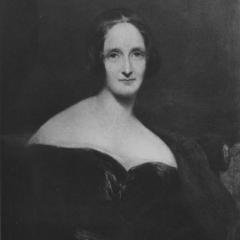
Mary Wollstonecraft Shelley

Mary Wollstonecraft Shelley was an English novelist best known for her famous work, 'Frankenstein'. Born on August 30, 1797, and passing away on February 1, 1851, she was an early female writer whose works explored themes such as women's rights, social inequalities, and scientific ethics. more

You May Also Like

“All great spirituality teaches about letting go of what you don’t need and who you are not. Then, when you can get little enough and naked enough and poor enough, you’ll find that the little place where you really are is ironically more than enough and is all that you need. At that place, you will have nothing to prove to anybody and nothing to protect. That place is called freedom. It’s the freedom of the children of God. Such people can connect with everybody. They don’t feel the need to eliminate anybody . . .”

“I have become convinced that the more wealth a country accumulates, the more isolated and lonely its people become. The loneliest are usually the children and the elderly. Children learn what they live, and isolation in the ‘village’ is one of the most destructive messages we daily write on the tablets of their hearts.”

“I believe that the most urgent need of parents today is to instill in our children a moral vision: what does it mean to be a good person, an excellent neighbor, a compassionate heart? What does it mean to say that God exits, that He loves us and He cares for us? What does it mean to love and forgive each other? Parents and caregivers of children must play a primary role in returning our society to a healthy sense of the sacred. We must commit to feeding our children’s souls in the same way we commit to feeding their bodies.”