Quotessence
Home / Quotes / Quote by Paul Lockhart

Quote by Paul Lockhart

“Why don't we want our children to learn to do mathematics? Is it that we don't trust them, that we think it's too hard? We seem to feel that they are capable of making arguments and coming to their own conclusions about Napoleon. Why not about triangles?”

Quote by Paul Lockhart

Author
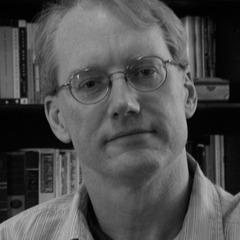
Paul Lockhart
Paul Lockhart

Paul Lockhart is a renowned math teacher known for his unique teaching methods and profound understanding of mathematics. His teaching philosophy emphasizes the beauty and intrinsic value of mathematics rather than its role as a subject. Details about his life and achievements are limited. more

You May Also Like

“Mathematics is the art of explanation. If you deny students the opportunity to engage in this activity-- to pose their own problems, to make their own conjectures and discoveries, to be wrong, to be creatively frustrated, to have an inspiration, and to cobble together their own explanations and proofs-- you deny them mathematics itself.”

“There is nothing as dreamy and poetic, nothing as radical, subversive, and psychedelic, as mathematics. It is every bit as mind blowing as cosmology or physics (mathematicians conceived of black holes long before astronomers actually found any), and allows more freedom of expression than poetry, art, or music (which depends heavily on properties of the physical universe). Mathematics is the purest of the arts, as well as the most misunderstood.”

“Our present ecological crisis, the biggest single practical threat to our human existence in the middle to long term, has, religious people would say, a great deal to do with our failure to think of the world as existing in relation to the mystery of God, not just as a huge warehouse of stuff to be used for our convenience.”

“I have, by God’s grace, learned as a member of the Christian community what is the nature of God’s mercy, which does not leave me to overcome my sin by my own effort, so I have something to say to the fellow-sufferer who does not know where to look for hope. And what I have to say depends utterly on my willingness not to let go of that awareness of myself that reminds me where I start each day—not as a finished saint but as a needy person still struggling to grow.”