“And yet, in Raissa, at every moment there is a child in a window who laughs seeing a dog that has jumped on a shed to bite into a piece of polenta dropped by a stonemason who has shouted from the top of the scaffolding, "Darling, let me dip into it," to a young servant-maid who holds up a dish of ragout under the pergola, happy to serve it to the umbrella-maker who is celebrating a successful transaction, a white lace parasol bought to display at the races by a great lady in love with an officer who has smiled at her taking the last jump, happy man, and still happier his horse, flying over the obstacles, seeing a francolin flying in the sky, happy bird freed from its cage by a painter happy at having painted it feather by feather, speckled with red and yellow in the illumination of that page in the volume where the philosopher says: "Also in Raissa, city of sadness, there runs an invisible thread that binds one living being to another for a moment, then unravels, then is stretched again between moving points as it draws new and rapid patterns so that at every second the unhappy city contains a happy city unaware of its own existence.”
Quote by Italo Calvino
Work
In this novel, the traveler Marco Polo recounts his journeys to a series of cities that exist beyond the physical world, each city embodying a different aspect of human life and culture. The ruler, Kublai Khan, listens intently, intrigued by the stories of places that are both real and imagined. The narrative delves into themes of perception, power, and the essence of existence. more
Author
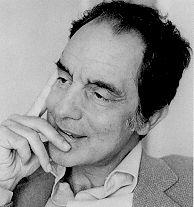
Italian writer and journalist, known for his unique narrative style and rich imagination. Calvino is considered one of the greatest writers of the 20th century, whose works have had a profound impact on literature both in Italy and around the world. more
You May Also Like
“Traveler’s past changes according to the route he has followed”
“I write for pages, get lost in the mezzanine hidden from stages.”