Quotessence
Home / Quotes / Quote by Yunus Emre

Quote by Yunus Emre

“We entered the house of realization, we witnessed the body. The whirling skies, the many-layered earth, the seventy-thousand veils, we found in the body. The night and the day, the planets, the words inscribed on the Holy Tablets, the hill that Moses climbed, the Temple, and Israfil's trumpet, we observed in the body. Torah, Psalms, Gospel, Quran -- what these books have to say, we found in the body. Everybody says these words of Yunus are true. Truth is wherever you want it. We found it all within the body.”

Quote by Yunus Emre

Work

The Drop That Became the Sea: Lyric Poems

Browse quotes and source details for this work. more

Author
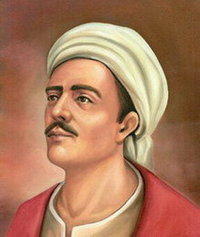
Yunus Emre
Yunus Emre

A wandering poet and a giant in Turkish literature, Yunus Emre was born in 1240 and died in 1321. His poetry has deeply touched the Turkish people and is hailed as one of the founders of Turkish literature. more

You May Also Like

“The state of emancipation toward which we are journeying can be described as freedom from the fear of loss. It is understood that Life flows to us from an unstinting Source of grace that will never lessen its giving as long as we are open to receiving. The people and things that are so precious to us are embodiments of qualities, and these qualities are derived from this beneficent Source. What we are so afraid of losing are qualities that we have invested in the particular forms we are attached to. We have confused these qualities with the forms we have discovered them in. Their beauty is like the beauty of sunlight that falls upon a brick wall: „Sunlight fell upon the wall; the wall received a borrowed splendor. Why set your heart on a piece of earth, simple one? Seek out the source which shines forever.“ Rumi, Mathnawi II: 708-09 The wall may crumble or be torn down, but the sun will always return to shine. To be spiritually mature is to be free of the fear of loss, knowing that we are connected to the Source of all generosity. (p. 161)”

“On the road that leads to the Beloved Every stone is made of gold. Every step we take brings knowledge to us. Even what appears to be a mistake, or an error, Can bring us closer to purity and truth. Every good intention, thought and action Guides the soul toward the Goal. Every true word that is heard, Every understanding received, Every challenge met, Every station, by God’s Grace, attained Leads the traveler Through the labyrinth Of steps and tests Surely, to the One Who has left, at every turn in the Road, Signs of His Existence, Clear signs showing the Way That lead to Him. Not only do our successes show us the way, But even more deeply, our apparent failures Those moments in our journey When we are most deeply humbled And realize our limitations, Realizing that every step we take Is not due to our own power and will, But occurs by the Grace of God. The journey that leads to the Beloved Is guided by His Love. (The first part of a lovely and poetic introduction to the spiritual autobiography, Journey Through Ten Thousand Veils, by Sheikha Maryam Kabeer Faye)”

“Only later – much, much later, and after losing all hope and undergoing a seemingly interminable Dark Night of the Soul – would Louie begin to see how Shah’s own work tied in with others. Not only among Sufis, nor in the general fields of spirituality and mysticism, nor in the work of Shah’s own family, friends of Shah, and friends of friends of Shah, and people who quoted people quoting Shah, but in diverse fields and in the town’s marketplace, mucky alleyways and smoke-clouded taverns of everyday life. That was a whole new vista, a continent beyond Shah’s own island – vast, exotic, and apparently self-contained as it had been, and yet not all and everything. Looking back, this wonderful caravanserai had been a very necessary, and much loved, step or two along the way.”

“Anyone who investigates the revealed religions with an open mind and a discerning heart is bound to discover the truth in all of them. Of course, there are notable differences between them. Each faith is distinguished by the personality of its messenger and the circumstances of its revelation. With the passing of time, faith traditions are also subject to the proliferation of distorted interpretations. Nonetheless, to seeing eyes it is plain to see that all of the world‘s great faiths harbor at their core the same message of love […] Through whichever channel Providence pours it out to the thirsty, the divine love that flows through revelation is from first to last a single substance. All fields are watered with one water. (p. 255)”

“One of the major drawbacks of being severed from the heart is that the more one is severed, the sicker the heart becomes, for the heart needs nourishment. Heedlessness starves the heart, robs it of its spiritual manna. One enters into a state of unawareness – a debilitating lack of awareness of God and an acute neglect of humanity’s ultimate destination: the infinite world of the Hereafter. When one peers into the limitless world through remembrance of God and increases in beneficial knowledge, one’s concerns become more focused on the infinite world, not the finite one that is disappearing and ephemeral. When people are completely immersed in the material world, believing that this world is all that matters and all that exists and that they are not accountable for their actions, they effect a spiritual death of their hearts.”

“We may also struggle with what could be considered justifiable fears. We have fears of loss, pain, disability, and death. These can be transformed only by the human being who has come to know what it means to „die before you die“. In the discipline of transformation, this expression means coming to know our spiritual home, our eternal Self. It is not a metaphor but an accurate description of a psycho-spiritual truth. Many of those who have lived through the experience of a clinical death and have returned to life know that death is not something to fear and that life is an immeasurable gift. These people return to their lives with less fear because they have experienced their true metaphysical home. At the same time they have known that this physical body is important as a means of contact with their fellow human beings. Against the backdrop of eternity this transient human life has acquired a new beauty. To die before death is to detach from our physical body, our thinking, and our emotions at will, as a conscious choice. This is the aim of certain forms of spiritual training. Through control of the breath, fasting, and sustained awareness it becomes possible to separate from our coarser bodies – physical, emotional, mental – and to mount the steed of pure consciousness. When consciousness is separated from the conditioned intellect and desire, it makes direct contact with the electromagnetic field of Love. The soul comes to know a different relationship to all the beings within this electromagnetic field. When we are connected with this Love, we are free of fear and of the domination of the lower self and the thoughts it generates. As Rumi said: „Thinking is powerless in the expression of love.“ Love is reckless and does not count the cost; it expresses itself through courage and self-sacrifice. Often our fear is a lack of love. To be free of fear we must love very much. (p. 159)”