Quotessence
Home / Quotes / Quote by Hamza Yusuf

Quote by Hamza Yusuf

“One of the major drawbacks of being severed from the heart is that the more one is severed, the sicker the heart becomes, for the heart needs nourishment. Heedlessness starves the heart, robs it of its spiritual manna. One enters into a state of unawareness – a debilitating lack of awareness of God and an acute neglect of humanity’s ultimate destination: the infinite world of the Hereafter. When one peers into the limitless world through remembrance of God and increases in beneficial knowledge, one’s concerns become more focused on the infinite world, not the finite one that is disappearing and ephemeral. When people are completely immersed in the material world, believing that this world is all that matters and all that exists and that they are not accountable for their actions, they effect a spiritual death of their hearts.”

Quote by Hamza Yusuf

Work

Author

Hamza Yusuf
Hamza Yusuf

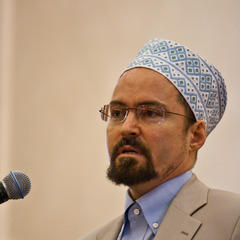
Hamza Yusuf, born in 1958, is a renowned scholar, writer, and speaker. His areas of expertise include Islam, religious philosophy, and cross-cultural communication. Hamza Yusuf is highly respected in the academic and religious communities for his in-depth research and dissemination of Islamic teachings. more

You May Also Like

“We may also struggle with what could be considered justifiable fears. We have fears of loss, pain, disability, and death. These can be transformed only by the human being who has come to know what it means to „die before you die“. In the discipline of transformation, this expression means coming to know our spiritual home, our eternal Self. It is not a metaphor but an accurate description of a psycho-spiritual truth. Many of those who have lived through the experience of a clinical death and have returned to life know that death is not something to fear and that life is an immeasurable gift. These people return to their lives with less fear because they have experienced their true metaphysical home. At the same time they have known that this physical body is important as a means of contact with their fellow human beings. Against the backdrop of eternity this transient human life has acquired a new beauty. To die before death is to detach from our physical body, our thinking, and our emotions at will, as a conscious choice. This is the aim of certain forms of spiritual training. Through control of the breath, fasting, and sustained awareness it becomes possible to separate from our coarser bodies – physical, emotional, mental – and to mount the steed of pure consciousness. When consciousness is separated from the conditioned intellect and desire, it makes direct contact with the electromagnetic field of Love. The soul comes to know a different relationship to all the beings within this electromagnetic field. When we are connected with this Love, we are free of fear and of the domination of the lower self and the thoughts it generates. As Rumi said: „Thinking is powerless in the expression of love.“ Love is reckless and does not count the cost; it expresses itself through courage and self-sacrifice. Often our fear is a lack of love. To be free of fear we must love very much. (p. 159)”

“As long as human beings are unconscious and dominated by selfish and illusory desires, there is no god who will force us to change. But as the history of revelation on earth testifies, guidance has come to all communities and nations. Through masters, saints and prophets, through sacred texts and oral tradition, humanity has been reminded and warned. Cosmic intelligence has continually been in communication with us; now the burden of responsibility rests on each human heart. (p. 164)”

“When you are drawn into love, your own sense of an isolated, separate self melts. When you are in love and you sit face-to-face with the one you love, you forget yourself in the beauty of your beloved. Because the beloved is a point of contact with beauty, you are filled with this beauty. Any lover becomes more beautiful through this love. This Beloved, which most people know only in the first moments of romantic love, is in fact present in many faces and guises as our capacity for love grows. This capacity transforms us and makes us more alive. We are never so alive as when we are in love, so why should we restrict this love to the almost impossible conditions of romantic love? Can't we be lovers all the time? (p. 192)”

“Knowledge of the Supreme brings immortality. "The wise one - He is not born, He does not die." For one who has died before death, the death of the body is merely a formality. To live in God is to live an endless Life. (p. 38)”

“A sound heart has knowledge and trust, not doubt and anxiety. Shubuhāt alludes to aspects closely connected to the heart: the soul, the ego, Satan’s whisperings and instigations, caprice, and the ardent love of this ephemeral world. The heart is an organ designed to be in a state of calm, which is achieved with the remembrance of God: Most surely, in the remembrance of God do hearts find calm (QURAN, 13:28). This calm is what the heart seeks out and gravitates to. It yearns always to remember God the Exalted. But when God is not remembered, when human beings forget God, then the heart falls into a state of agitation and turmoil. In this state it becomes vulnerable to diseases because it is undernourished and cut off, Cells require oxygen, so we breathe, If we stop breathing, we die. The heart also needs to breathe, and the breath of the heart is none other than the remembrance of God. Without it, the spiritual heart dies. The very purpose of revelation and of scripture is to remind us that our hearts need to be nourished.”

“The three dimensions of Sufi teaching: the Law, the Way, and the Truth; or knowledge, works, and attainment to God; or theory, practice, and spiritual realization. Knowledge of God, man, and the world derives ultimately from God Himself, primarily by means of revelation, – in the context of Islam – the Koran and the Hadith of the Prophet; and secondarily by means of inspiration or „unveiling“, the spiritual vision of the saints, or the realized Sufis. Knowledge provides the illumination whereby man can see everything in its proper place. (p. 11)”