Quotessence
Home / Quotes / Quote by Olaf Stapledon

Quote by Olaf Stapledon

“There is much in this vision that will remind you of your mystics; yet between them and us there is far more difference than similarity, in respect both of the matter and the manner of our thought. For while they are confident that the cosmos is perfect, we are sure only that it is very beautiful. While they pass to their conclusion without the aid of intellect, we have used that staff every step of the way. Thus, even when in respect of conclusions we agree with your mystics rather than your plodding intellectuals, in respect of method we applaud most your intellectuals; for they scorned to deceive themselves with comfortable fantasies.”

Quote by Olaf Stapledon

Work

Last and First Men

Browse quotes and source details for this work. more

Author

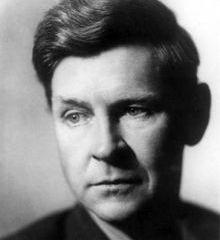
Olaf Stapledon
Olaf Stapledon

Olaf Stapledon, born on May 10, 1886, in Scotland, and died on September 6, 1950, was a philosopher and writer. His works encompassed cosmic philosophy, life philosophy, and socialist ideas, which had a profound impact on later generations. more

You May Also Like

“Then my sole relief was to walk along the corridor of the third storey, backwards and forwards, safe in the silence and solitude of the spot, and allow my mind's eye to dwell on whatever bright visions rose before it - and, certainly, they were many and glowing; to let my heart be heaved by the exultant movement, which, while it swelled it in trouble, expanded it with life; and, best of all, to open my inward ear to a tale that was never ended - a tale my imagination created, and narrated continuously; quickened with all of incident, life, fire, feeling, that I desired and had not in my actual existence.”

“The danger of abusing the discovery of the truth value of imagination for retrogressive tendencies is exemplified by the work of Carl Jung. More empathically than Freud, he has insisted on the cognitive force of imagination. According to Jung, phantasy is ‘undistinguishably’ united with all other mental functions, it appears ‘now as primeval, now as the ultimate and most audacious synthesis of all capabilities.’ Phantasy is above all the ‘creative activity out of which flow the answers to all answerable questions’; it is ‘the mother of all possibilities, in which all mental opposites as well as the conflict between internal and external world are united.’ Phantasy has always built the bridge between the irreconcilable demands of object and subject, extroversion and introversion. The simultaneously retrospective and expectant character of imagination is thus clearly stated: it looks not only back to an aboriginal golden past, but also forward to still unrealized but realizable possibilities.”

“Father had stretched out his long legs and was tilting back in his chair. Mother sat with her knees crossed, in blue slacks, smoking a Chesterfield. The dessert dishes were still on the table. My sisters were nowhere in evidence. It was a warm evening; the big dining-room windows gave onto blooming rhododendrons. Mother regarded me warmly. She gave me to understand that she was glad I had found what I had been looking for, but that she and father were happy to sit with their coffee, and would not be coming down. She did not say, but I understood at once, that they had their pursuits (coffee?) and I had mine. She did not say, but I began to understand then, that you do what you do out of your private passion for the thing itself. I had essentially been handed my own life. In subsequent years my parents would praise my drawings and poems, and supply me with books, art supplies, and sports equipment, and listen to my troubles and enthusiasms, and supervise my hours, and discuss and inform, but they would not get involved with my detective work, nor hear about my reading, nor inquire about my homework or term papers or exams, nor visit the salamanders I caught, nor listen to me play the piano, nor attend my field hockey games, nor fuss over my insect collection with me, or my poetry collection or stamp collection or rock collection. My days and nights were my own to plan and fill.”

“Yet the misty spring rain softened the outline of the mountain across the river and made it even more beautiful. So gentle was the rain that they hardly knew they were getting wet as they strolled back toward the car, not even bothering to put up their umbrella. The slender threads of rain vanished into the river without a ripple. Cherry blossoms were intermingled with young green leaves, the colours of the budding trees all delicately subdued in the rain.”

“And who cares for imagination? Who does not think it a rather dangerous, senseless attribute, akin to weakness, perhaps partaking of frenzy - a disease rather than a gift of the mind? Probably all think it so but those who possess, or fancy they possess it. To hear them speak, you would believe that their hearts would be cold if that elixir did not flow about them, that their eyes would be dim if that flame did not refine their vision, that they would be lonely if this strange companion abandoned them. You would suppose that it imparted some glad hope to spring, some fine charm to summer, some tranquil joy to autumn, some consolation to winter, which you do not feel. All illusion, of course; but the fanatics cling to their dream, and would not give it for gold.”