Quotessence
Home / Quotes / Quote by John Corey Whaley

Quote by John Corey Whaley

“We let them help because they needed it, not us. We didn't let them help us because we needed it, we let them help us because inside of humans is this thing, this unnamed need to feel as if we are usefel in the world. To feel as if we have something significant to contribute."---Cullen”

Quote by John Corey Whaley

Work

Where Things Come Back

This book explores themes of environmentalism, identity, and the supernatural through the lens of a young protagonist who discovers that the return of a unique creature to his hometown is more than a simple event. more

Author
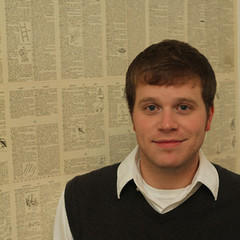
John Corey Whaley
John Corey Whaley

John Corey Whaley is an American writer born on January 19, 1984. His works are acclaimed for their unique narrative style and profound insights into the lives of teenagers. more

You May Also Like

“It's easy to romanticize the people in our lives that mean something to us. We elevate them onto a higher plane that the rest of humanity. They appear glorious and pristine and full of wonders of the Universe all wrapped up into one person-sized box waiting to be unpacked. It's easy to forget, when they appear perfect in every way and in every facet of their lives with every action they take, in the end they are still human. And we duly forget being human comes with an inherent composition of flaws in our genetic and mental make-up.”

“I have always lived in a world in which I'm just a spot in history. My life is not the important point. I'm just part of the continuum, and that continuum, to me, is a marvelous thing. The history of life, and the history of the planet, should go on and on and on and on. I cannot conceive of anything in the universe that has more meaning than that." [Sheri S. Tepper: Speaking to the Universe, Locus Magazine, September 1998]”

“The case for the humanities is not hard to make, though it can be difficult--to such an extent have we been marginalized, so long have we acceded to that marginalization--not to sound either defensive or naive. The humanities, done right, are the crucible in which our evolving notions of what it means to be fully human are put to the test; they teach us, incrementally, endlessly, not what to do, but how to be. Their method is confrontational, their domain unlimited, their "product" not truth but the reasoned search for truth, their "success" something very much like Frost's momentary stay against confusion.”