“Science should leave off making pronouncements: the river of knowledge has too often turned back on itself.”
Quote by James Jeans
Work
The Mysterious Universe [New Revised Edition]
This revised edition delves into the mysteries of the universe, discussing celestial bodies, space exploration, and the fundamental principles of astrophysics. more
Author
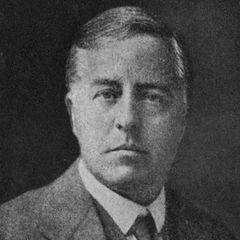
James Jeans
James Jeans was an influential British physicist known for his contributions to astrophysics and cosmology. His research encompassed stellar structure and the origins of the universe, having a profound impact on modern physics. more
You May Also Like
Source: Opera philosophica quae latine scripsit omnia: in unum corpusnunc primum collecta studio et labore Gulielmi Molesworth
“Scientific knowledge advances haltingly and is stimulated by contention and doubt.”
Source: Elements of Natural Philosophy
“Something unknown is doing we don't know what-that is what our theory amounts to.”
Source: The nature of the physical world
“Surgical knowledge depends on long practice, not from speculations.”
Source: The Middle Works, 1899-1924: 1910-1911