“Every trial and experience you have passed through is necessary for your salvation.”
Quote by Brigham Young
Work
Journal of Discourses
This comprehensive volume includes addresses given by prominent figures such as Brigham Young and Heber C. Kimball, offering insights into the teachings and history of the Mormon faith during its formative years. more
Author
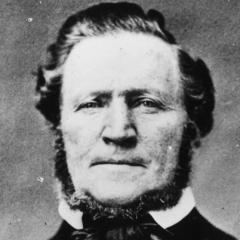
Brigham Young
Brigham Young was a significant figure in the history of the Latter-day Saints, playing a pivotal role in the expansion of the movement into the American West. Born on June 1, 1801, in Whitingham, Vermont, he became a convert to Mormonism and a close associate of Joseph Smith, the movement's founder. Following Smith's death, Young assumed leadership of the LDS Church and led its members to the Salt Lake Valley in present-day Utah. His vision and leadership were instrumental in the establishment of Salt Lake City and the surrounding communities. He passed away on August 29, 1877. more
You May Also Like
Source: JOHN MUIR Ultimate Collection: Travel Memoirs, Wilderness Essays, Environmental Studies & Letters (Illustrated): Picturesque California, The Treasures of the Yosemite, Our National Parks, Steep Trails, Travels in Alaska, A Thousand-mile Walk to the Gulf, Save the Redwoods, The Cruise of the Corwin and more
Source: The Power of Positive Thinking
“The octave formed a circle and gave our noble earth its form.”
“The highest goal of music is to connect one's soul to their Divine Nature, not entertainment”
“Music... a kind of inarticulate, unfathomable speech, which leads to the edge of the Infinite.”
Source: Works
Source: Sept. 1964-May 1949