Quotessence
Home / Quotes / Quote by Ralph Waldo Emerson

Quote by Ralph Waldo Emerson

Work

The Prose Works of Ralph Waldo Emerson: Representative men. English traits. Conduct of life

This volume includes Emerson's influential essays on various aspects of human conduct and the nature of individual identity, reflecting his philosophy of transcendentalism and its impact on American culture. more

Author
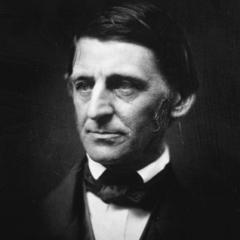
Ralph Waldo Emerson
Ralph Waldo Emerson

American essayist, poet, and philosopher. Born on May 25, 1803, and died on April 27, 1882. Known for his transcendentalist philosophy, his works have had a profound impact on literature and the intellectual world. more

You May Also Like

“Our culture, therefore, must not omit the arming of the man. Let him hear in season, that he is born into the state of war, and that the commonwealth and his own well-being require that he should not go dancing in the weeds of peace, but warned, self- collected, and neither defying nor dreading the thunder, let him take both reputation and life in his hand, and, with perfect urbanity, dare the gibbet and the mob by the absolute truth of his speech, and the rectitude of his behaviour.”

“Each man, if he attempts to join himself to others, is on all sides cramped and diminished of his proportion; and the stricter theunion, the smaller and the more pitiful he is. But leave him alone, to recognize in every hour and place the secret soul, he will go up and down doing the works of a true member, and, to the astonishment of all, the work will be done with concert, though no man spoke.”

“Plato says that the punishment which the wise suffer who refuse to take part in the government, is, to live under the government of worse men; and the like regret is suggested to all the auditors, as the penalty of abstaining to speak,--that they shall hear worse orators than themselves.”

“A garden has this advantage, that it makes it indifferent where you live. A well-laid garden makes the face of the country of no account; let that be low or high, grand or mean, you have made a beautiful abode worthy of man.”

“The best conversation is rare. Society seems to have agreed to treat fictions as realities, and realities as fictions; and the simple lover of truth, especially if on very high grounds, as a religious or intellectual seeker, finds himself a stranger and alien.”

“There is a mortifying experience in particular, which does not fail to wreak itself also in the general history; I mean "the foolish face of praise," the forced smile which we put on in company where we do not feel at ease, in answer to conversation which does not interest us. The muscles, not spontaneously moved but moved, by a low usurping wilfulness, grow tight about the outline of the face, with the most disagreeable sensation.”