“'Men die of the diseases which they have studied most,' remarked the surgeon, snipping off the end of a cigar with all his professional neatness and finish. 'It's as if the morbid condition was an evil creature which, when it found itself closely hunted, flew at the throat of its pursuer. If you worry the microbes too much they may worry you. I've seen cases of it, and not necessarily in microbic diseases either. There was, of course, the well-known instance of Liston and the aneurism; and a dozen others that I could mention.'”
Quote by Arthur Conan Doyle
Work
Collected Works of Sir Arthur Conan Doyle (Delphi Classics)
The Collected Works of Sir Arthur Conan Doyle (Delphi Classics) is a comprehensive compilation of the author's literary output. It encompasses the iconic Sherlock Holmes detective stories, which have captivated readers for over a century, as well as a variety of other works, including historical novels, science fiction, and non-fiction. This collection is a testament to Doyle's versatility as a writer and his enduring influence on the genre of detective fiction. more
Author
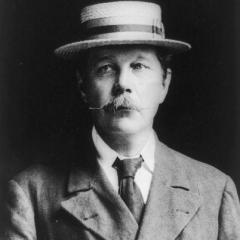
Arthur Conan Doyle
Arthur Conan Doyle, born on May 22, 1859 in Edinburgh, Scotland, was a renowned Scottish physician and writer. He is best known for his creation of the Sherlock Holmes series of detective novels, which have had a profound impact on the development of detective fiction and played a crucial role in shaping modern detective culture. more
You May Also Like
Source: 'Life and Death of Mr Badman' and 'The Holy War'
“Disease may also be thought of as the negation of the normal.”
Source: Hippocrates