Quotessence
Home / Quotes / Quote by A.M. Homes

Quote by A.M. Homes

“I'm very interested in compassion - compassion for oneself and others. I write about very complicated characters and experiences and try to do it without judging the character or the action.”

Quote by A.M. Homes

Author
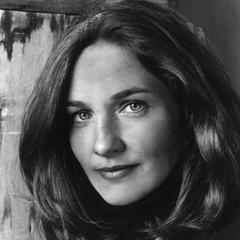
A.M. Homes
A.M. Homes

A.M. Homes is an American writer born on December 18, 1961. Her works span across novels, short story collections, and essays, known for her unique narrative style and profound social insights. more

You May Also Like

“I think it's really important that women support each other. I've heard of a very successful female director saying she doesn't identify as being a feminist or a woman in Hollywood. And I understand that, but I feel so differently. It's so important to identify as a woman and have a voice, to understand that it's different from a male voice, and to understand the nuances that go into that. I love women. I think I'm a girl's girl. It's super important that we have a voice in the industry.”

“When I was starting out, conceptual photography had become something that had to be amateur - like, that had to be black-and-white, or photocopied, or really not an object in order to be taken seriously. It had to work against technical mastery, and so on. So I think that my work is full of obstacles in the sense that it does look highly familiar and accessible. It does look like it's already "solved at first sight." It does look like it's part of a larger industry.”

“I used to refer to my photos as free radicals - and maybe that has to do with this idea of navigating history. I think of the works as having this dormant illness that can really latch on to different histories. So they can exist in a world pretending to be neatly encapsulated, already framed, and fixed. But actually they are these parasites dependent on the failure of modernist history and on multiplicity.”

“I think there's a general confusion that my work is about types of photography. But really that's just a tool to introduce some questions I have about seeing. What happens when all of these conditions and structures and histories and cultures and tools you have around you begin to fail? On the one hand there is an engagement with histories and cultures, and on the other, there is this very lonesome space of actually coming to terms with seeing.”

“What I found interesting in dance is the idea that my work has always been dealing with the nervousness between the human subject as a subject and the human subject as a form. And if you look at my dance films, there are always these cuts between the dancer as a form, the dancer as a subject, and this kind of very harsh treatment of the dancer as someone who's actually drawing with their body.”