Quotessence
Home / Quotes / Quote by Lydia M. Child

Quote by Lydia M. Child

“Even if nothing worse than wasted mental effort could be laid to the charge of theology, that alone ought to be sufficient to banish it from the earth, as one of the worst enemies of mankind.”

Quote by Lydia M. Child

Author
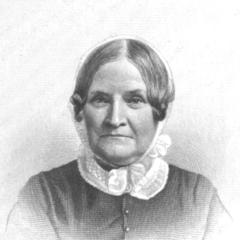
Lydia M. Child
Lydia M. Child

Lydia M. Child was an American abolitionist, women's rights activist, and writer. Born on February 11, 1802, she dedicated her life to advocating for the rights of African Americans and women. Child was a prominent figure in the abolitionist movement and played a significant role in the fight against slavery. She also contributed to the women's rights movement by advocating for women's suffrage and equality. Her works, including 'The Woman in the Nineteenth Century,' continue to influence contemporary discussions on gender equality and social justice. more

You May Also Like

“If men do their best endeavours to free themselves from all errors, and yet fail of it through human frailty, so well I am persuaded of the goodness of God, that if in me alone should meet a confluence of all such errors of all the Protestants in the world that were thus qualified, I should not be so much afraid of them all, as I should be to ask pardon for them.”

“In the early 50s in the US, there was what was called McCarthyism and the only reason it succeeded was that there was no resistance to it. When they tried the same thing in the 60s it instantly collapsed because people simply laughed at it so they couldn't do it. Even a dictatorship can't do everything it wants. It's got to have some degree of popular support.”

“In a discussion of this kind our interest should be centered not on the weight of the authority but on the weight of the argument. Indeed the authority of those who set out to teach is often an impediment to those who wish to learn. They cease to use their own judgment and regard as gospel whatever is put forward by their chosen teacher.”

“It cannot be doubted that theistic belief is a comfort and a solace to those who hold it, and that the loss of it is a very painful loss. It cannot be doubted, at least, by many of us in this generation, who either profess it now, or received it in our childhood and have parted from it since with such searching trouble as only cradle-faiths can cause. We have seen the spring sun shine out of an empty heaven, to light up a soulless earth; we have felt with utter loneliness that the Great Companion is dead.”