“What really matters for me is ... the more active role of the observer in quantum physics ... According to quantum physics the observer has indeed a new relation to the physical events around him in comparison with the classical observer, who is merely a spectator.”
Quote by Wolfgang Pauli
Work
Wissenschaftlicher Briefwechsel mit Bohr, Einstein, Heisenberg u.a. Band IV, Teil III: 1955–1956. Scientific Correspondence with Bohr, Einstein, Heisenberg, a.o. Volume IV, Part III: 1955–1956
Wissenschaftlicher Briefwechsel mit Bohr, Einstein, Heisenberg u.a. Band IV, Teil III: 1955–1956 is a comprehensive volume that includes letters and discussions among some of the most influential scientists of the 20th century. The correspondence offers a unique glimpse into the minds of these physicists, showcasing their thoughts on theoretical physics, quantum mechanics, and the broader implications of their work. This volume is particularly significant for those interested in the historical development of scientific thought and the personal interactions among leading scientists during a pivotal era in physics. more
Author
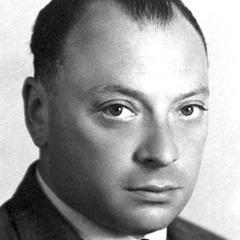
Wolfgang Pauli
Wolfgang Pauli was a distinguished physicist born on April 25, 1900, and died on December 15, 1958. He is recognized for his substantial contributions to quantum mechanics, especially for the formulation of the Pauli exclusion principle. Pauli was awarded the Nobel Prize in Physics in 1945 for his work on the explanation of the fine structure of atomic spectra. more
You May Also Like
Source: The Principles of Science: Book IV. Inductive investigation. Book V. Generalization, analogy, and classification. Book VI. Reflections on the results and limits of scientific method
Source: The Realm of the Nebulæ
“[The internet] ought to be like clay, rather than a sculpture that you observe from a distance.”
“...separation of the observer from the phenomenon to be observed is no longer possible.”
Source: Across the frontiers