Quotessence
Home / Quotes / Quote by Philip Schaff

Quote by Philip Schaff

Work

Church and State in The United States: The American Idea of Religious Liberty and its Practical Effects

An in-depth examination of the evolution of the separation of church and state in America, this book delves into the legal, social, and political implications of religious freedom. It analyzes case studies and historical events that have shaped the American understanding of religious liberty and its practical effects on various aspects of public life. more

Author
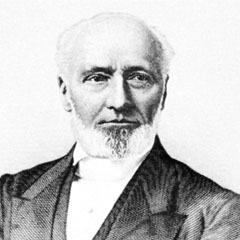
Philip Schaff
Philip Schaff

Philip Schaff was a historian and theologian, born on January 1, 1819, and died on October 20, 1893. His research focused on the history of religion and Christian theology, which had a profound impact on later generations. more

You May Also Like

“What gets called 'the sixties' left a mixed legacy and a lot of divides. But it opened everything to question, and what seems the most fundamental and most pervasive in all the ensuing changes is the loss of faith in authority: the authority of government, of science, of patriarchy, of progress, of capitalism, of violence, of whiteness.”

“A restlessness has seized hold of many of us, a sense that we should be doing something else, no matter what we are doing, or doing at least two things at once, or going to check some other medium. It's an anxiety about keeping up, about not being left out or getting behind.”

“Previous technologies have expanded communication. But the last round may be contracting it. The eloquence of letters has turned into the unnuanced spareness of texts; the intimacy of phone conversations has turned into the missed signals of mobile phone chat ... ('you're breaking up' is the cry of our time).”

“There is so much information that our ability to focus on any piece of it is interrupted by other information, so that we bathe in information but hardly absorb or analyse it. Data are interrupted by other data before we've thought about the first round, and contemplating three streams of data at once may be a way to think about none of them.”

“When I think about, say, 1995, or whever the last moment was before most of us were on the internet and had mobile phones, it seems like a hundred years ago. ... Time passed in fairly large units, or at least not in milliseconds and constant updates. A few hours wasn't such a long time to go between moments of contact with your work, your people or your trivia.”