Quotessence
Home / Quotes / Quote by Charles Dickens

Quote by Charles Dickens

“Let the tears which fell, and the broken words which were exchanged in the long close embrace between the orphans, be sacred. A father, sister, and mother, were gained, and lost, in that one moment. Joy and grief were mingled in the cup; but there were no bitter tears: for even grief arose so softened, and clothed in such sweet and tender recollections, that it became a solemn pleasure, and lost all character of pain.”

Quote by Charles Dickens

Work

Oliver Twist

Oliver Twist is a classic novel that follows the life of an orphan boy born in a workhouse. After daring to ask for more food, Oliver is punished and eventually runs away to London. There, he is taken in by a group of young pickpockets led by the cunning Fagin. The story explores themes of poverty, social injustice, and the struggle between good and evil as Oliver encounters both cruel and compassionate characters, ultimately seeking a place where he belongs. more

Author

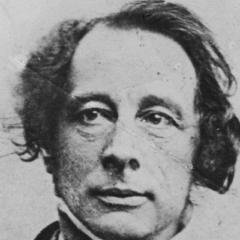
Charles Dickens
Charles Dickens

Charles Dickens, a British writer born on February 7, 1812, and died on June 9, 1870, is one of the greatest novelists of the 19th century. Known for his profound social criticism and vivid narrative style, Dickens' works extensively cover social reality, revealing various issues in the British society of the time. more

You May Also Like

“We are accustomed to repeating the cliché, and to believing, that 'our most precious resource is our children.' But we have plenty of children to go around, God knows, and as with Doritos, we can always make more. The true scarcity we face is practicing adults, of people who know how marginal, how fragile, how finite their lives and their stories and their ambitions really are but who find value in this knowledge, even a sense of strange comfort, because they know their condition is universal, is shared.”

“The aspirations of democracy are based on the notion of an informed citizenry, capable of making wise decisions. The choices we are asked to make become increasingly complex. They require the longer-term thinking and greater tolerance for ambiguity that science fosters. The new economy is predicated on a continuous pipeline of scientific and technological innovation. It can not exist without workers and consumers who are mathematically and scientifically literate.”