Quotessence
Home / Quotes / Quote by Dwight L. Moody

Quote by Dwight L. Moody

“Some day you will read in the papers that D.L. Moody of East Northfield, is dead. Don't you believe a word of it! At that moment I shall be more alive than I am now; I shall have gone up higher, that is all, out of this old clay tenement into a house that is immortal-a body that death cannot touch, that sin cannot taint; a body fashioned like unto His glorious body.”

Quote by Dwight L. Moody

Work

Secret Power: The Secret of Success in Christian Life and Work

This book delves into the spiritual and ethical dimensions of achieving success in various aspects of life, emphasizing the role of faith and Christian values. more

Author
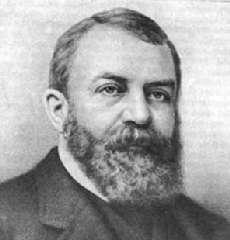
Dwight L. Moody
Dwight L. Moody

Dwight L. Moody was a prominent American evangelist, born on February 5, 1837, and died on December 22, 1899. He is known for his contributions to the spread of the Gospel and Christian education. more

You May Also Like

“Don't be misled into believing that somehow the world owes you a living. The boy who believes that his parents, or the government, or any one else owes him his livelihood and that he can collect it without labor will wake up one day and find himself working for another boy who did not have that belief and, therefore, earned the right to have others work for him.”

“For my part, I believe that the vain, glorious and the violent will not inherit the earth. . . . In pursuance of that faith my friends and I take the hands of the dying in our hands. And some of us travel to the Pentagon, and others live in the Bowery and serve there, and others speak unpopularly and plainly of the fate of the unborn and of convicted criminals. It is all one.”

“I believe that almost all important, useful ideas are simple. Peter Whittle has recently put it nicely in an autobiographical essay. "If a piece of work is heavy and complicated then it is wrong." . . . Some writers feel that to express their ideas in simple terms is degrading. Some use complexity to disguise the paucity of their material. In fact, simplicity is a virtue and when, as here, it is both original and useful, it can represent a real advance in knowledge.”