Quotessence
Home / Quotes / Quote by Alexander Shulgin

Quote by Alexander Shulgin

Work

Pihkal: A Chemical Love Story

This book is a memoir that delves into the author's journey with psychedelic drugs, examining their influence on his life, relationships, and artistic endeavors. The narrative is interspersed with scientific and historical context, offering a unique perspective on the use and effects of these substances. more

Author
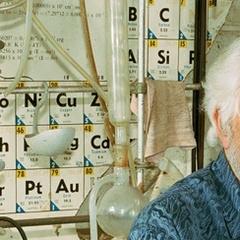
Alexander Shulgin
Alexander Shulgin

Alexander Shulgin, born on June 17, 1925, was an American organic chemist and pharmacologist renowned for his work in the field of synthetic drugs. His research focused on psychoactive substances, including the synthesis of LSD and other compounds. Shulgin is known for his contributions to drug chemistry, and his books 'PIHKAL' and 'TIHKAL' document his extensive research, which has had a profound impact on the understanding and application of psychoactive substances. more

You May Also Like

“How he could be a good user of LSD," I asked, "And know about the spiritual dimension - all that sort of thing - and still be a crook? I don't understand." "Then it's time you did. Psychedelic drugs don't change you - they don't change you character - unless you want to be changed. They enable change; they can't impose it.”

“Use them with care, and use them with respect as to the transformations they can achieve, and you have an extraordinary research tool. Go banging about with a psychedelic drug for a Saturday night turn-on, and you can get into a really bad place, psychologically. Know what you're using, decide just why you're using it, and you can have a rich experience. They're not addictive, and they're certainly not escapist, either, but they're exceptionally valuable tools for understanding the human mind, and how it works.”

“...wordless conditioning is crude and wholesale; cannot bring home the finer distinctions, cannot inculcate the more complex courses of behavior. For that there must be words, but words without reason... Not so much like drops of water, though water, it is true, can wear holes in the hardest granite; rather, drops of liquid sealing-wax, drops that adhere, encrust, incorporate themselves with what they fall on, till finally the rock is all one scarlet blob.”

“A physical shortcoming could produce a kind of mental excess. The process, it seemed, was reversible. Mental excess could produce, for its own purposes, the voluntary blindness and deafness of deliberate solitude, the artificial impotence of asceticism.”

“Her cheeks were flushed. She caught hold of the Savage's arm and pressed it, limp, against her side. He looked down at her for a moment, pale, pained, desiring, and ashamed of his desire. He was not worthy, not... Their eyes for a moment met. What treasures hers promised! A queen's ransom of temperament. Hastily he looked away, disengaged his imprisoned arm. He was obscurely terrified lest she should cease to be something he could feel himself unworthy of.”

“One of the principal functions of a friend is to suffer (in a milder and symbolic form) the punishments that we should like, but are unable, to inflict upon our enemies.”

“Katy was neither a Methodist nor a Masochist. She was a goddess and the silence of goddesses is genuinely golden. None of your superficial plating. A solid, twenty-two-carat silence all the way through. The Olympian's trap is kept shut, not by an act of willed discretion, but because there's really nothing to say. Goddesses are all of one piece. There's no internal conflict in them. Whereas the lives of people like you and me are one long argument. Desires on one side, woodpeckers on the other. Never a moment of real silence.”