Quotessence
Home / Quotes / Quote by Rudolf Arnheim

Quote by Rudolf Arnheim

“From building a fire one can learn something about artistic composition. If you use only small kindling and large logs, the fire will quickly eat up the small pieces but will not become strong enough to attack the large ones. You must supply a scale of sizes from the smallest to the largest. The human eye also will not make its way into a painting or building unless a continuum of shapes leads from the small to the large, from the large to the small.”

Quote by Rudolf Arnheim

Author
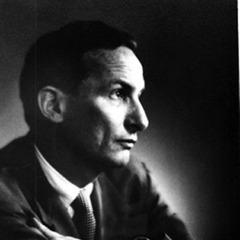
Rudolf Arnheim
Rudolf Arnheim

Rudolf Arnheim was a renowned art theorist and psychologist, known for his profound insights into visual art and aesthetic experience. His work spans various fields including art psychology, film theory, and visual culture. more

You May Also Like

“Psychology should be the chief basic science upon which the practices of education depend. It should have supplied education with the information it needs concerning the processes of understanding, learning, and thinking, among other things. One of the difficulties has been that such theory as has been developed has been based primarily upon studies of behavior of rats and pigeons. As someone has said, some of the theory thus developed has been an insult even to the rat.”

“A new world of complex relationships and feelings opens up when the peer group takes its place alongside the family as the emotional focus of the child's life. Early peer relationships contribute significantly to the child's ability to participate in a group (and in that sense, society), deal with competition and disappointment, enjoy the intimacy of friendships, and intuitively understand social relationships as they play out at school, in the neighborhood, and later in the workplace and adult family.”

“Parents are led to believe that they must be consistent, that is, always respond to the same issue the same way. Consistency is good up to a point but your child also needs to understand context and subtlety . . . much of adult life is governed by context: what is appropriate in one setting is not appropriate in another; the way something is said may be more important than what is said. . . .”

“To be motivated to sit at home and study, instead of going out and playing, children need a sense of themselves over time--they need to be able to picture themselves in the future.... If they can't, then they're simply reacting to daily events, responding to the needs of the moment--for pleasure, for affiliation, for acceptance.”