Quotessence
Home / Quotes / Quote by Ajahn Chah

Quote by Ajahn Chah

Author

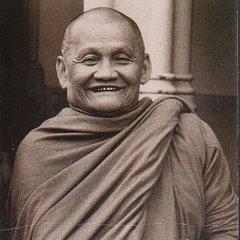
Ajahn Chah
Ajahn Chah

Ajahn Chah (June 17, 1918 – January 16, 1992) was a renowned Thai Buddhist monk and meditation master in the Theravada tradition. Born in a rural village in Ubon Ratchathani, Thailand, he ordained as a monk at age 20 and studied under several teachers. Known for his simple, direct teaching style, he emphasized mindfulness and daily-life practice. He founded forest monasteries in Thailand and trained many Western disciples, spreading Buddhist meditation globally. His teachings continue to inspire seekers worldwide. more

You May Also Like

“I think that metaphor really is a key to explaining thought and language. The human mind comes equipped with an ability to penetrate the cladding of sensory appearance and discern the abstract construction underneath - not always on demand, and not infallibly, but often enough and insightfully enough to shape the human condition. Our powers of analogy allow us to apply ancient neural structures to newfound subject matter, to discover hidden laws and systems in nature, and not least, to amplify the expressive power of language itself.”

“To make a covenant with the Lord to always keep His commandments is a serious obligation, and to renew that covenant by partaking of the sacrament is equally serious. The solemn moments of thought while the sacrament is being served have great significance. They are moments of self-examination, introspection, self-discernment...a time to reflect and to resolve.”

“In every Christian's Heart, there is a cross and a throne, and the Christian is on the throne till he puts himself on the cross; if he refuses the cross, he remains on the throne. Perhaps this is at the bottom of the backsliding and worldliness among Gospel believers today. We want to be saved, but we insist that Christ do all the dying. No cross for us, no dethronement, no dying. We remain king within the little kingdom of man's soul and wear our tinsel crown with all the pride of a caesar; but we doom ourselves to shadows and weakness and spiritual sterility.”