Quotessence
Home / Quotes / Quote by D.T. Suzuki

Quote by D.T. Suzuki

Work

An Introduction to Zen Buddhism

An Introduction to Zen Buddhism provides a comprehensive look at the history, teachings, and practices of Zen Buddhism. The text delves into the core concepts and techniques that define this path of enlightenment, including meditation, mindfulness, and the concept of Zen enlightenment. It is suitable for both beginners and those with some prior knowledge of Zen, aiming to offer a clear and accessible introduction to this rich and complex tradition. more

Author
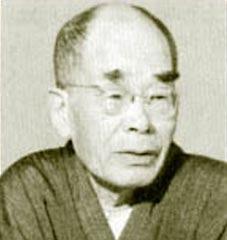
D.T. Suzuki
D.T. Suzuki

D.T. Suzuki, a renowned Japanese philosopher, Buddhist scholar, and translator, was born on October 18, 1870, and died on July 12, 1966. He is best known for his profound research into Zen Buddhism and his influential translations, which have greatly contributed to the Western understanding of Eastern philosophy and culture. more

You May Also Like

“I meant: what do I want to do now, who do I want to be now? And I look at these questions from the perspective of someone with twenty years left, or twenty-five, whatever, of active public life, and I have no ambitions, none, I don’t want to prove anything to anybody, I don’t want to convince the world of anything anymore, I don’t want to work. I want to be as peaceful as possible and think and read and maybe write a little, just journals and notes, you know, like a blog. But on paper. I’ll tell no one about it.”

“When I listen to that distant call [of the cuckoo], I become freshly aware of a sense of oneness with everything that exists. At such moments I come to see that everything is flowing together like a timeless river, and I become thoroughly convinced of this reality. The invisible becomes clearer than the visible, and the eternal becomes closer than the present. ,,, One of the tragedies of modernity is that artificial sounds are making it impossible to hear the sounds of eternity. They are cutting off the sounds that come from within the deepest part of us.”

“Much of the contemporary American atheistic movement seems to be treating atheism like a new kind of religion. ... It's just that some atheists are so damn evangelical about their nonreligion they might as well be ringing doorbells and handing out leaflets.”

“She often found herself caught in a rapture for minutes at a time, sometimes longer. But someone observed that she was never enraptured while she was cooking breakfast. If she were, she might burn it. Eternity can dovetail into our practical lives. It's possible for us to manage the toast and the rapture.”

“As Hsiang-yen put it, "There's no use for artificial discipline, For, move as I will, I manifest the ancient Tao." At this level, human life is beyond anxiety, for it can never make a mistake. If we live, we live; if we die, we die; if we suffer, we suffer; if we are terrified, we are terrified. There is no problem about it. A Zen master was once asked, "It is terribly hot, and how shall we escape the heat?" "Why not," he answered, "go to the place where it is neither hot nor cold?" "Where is that place?" "In summer we sweat; in winter we shiver." In Zen one does not feel guilty about dying, or being afraid, or disliking the heat. At the same time, Zen does not insist upon this point of view as something which one ought to adopt; it does not preach it as an ideal. For if you don't understand it, your very not-understanding is also IT. There would be no bright stars without dim stars, and, without the surrounding darkness, no stars at all.”