“Hatred, jealousy and excessive attachment cause suffering and agitation. I feel compassion can help us overcome these disturbances and let us return to a calm state of mind. Compassion is not just being kind to your friend. That involves attachment because it is based on expectation. Compassion is when you do something good without any expectations - based on realizing that "the other person is also just like me".”
Quote by Dalai Lama
Author
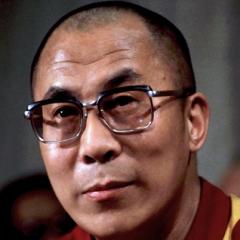
Dalai Lama
The Dalai Lama (born July 6, 1935) is the 14th Dalai Lama, a prominent religious leader of Tibetan Buddhism's Gelug school. Born as Tenzin Gyatso in Qinghai Province, China, he is recognized as an incarnation of Avalokiteshvara. He advocates non-violence, peace, and interfaith dialogue, and was awarded the Nobel Peace Prize in 1989. However, his political activities are viewed by the Chinese government as separatist, and he has lived in exile in India since 1959. His influence remains controversial, blending religious authority with political dissent. more
You May Also Like
Source: Fight Global Warming Now: The Handbook for Taking Action in Your Community