Quotessence
Home / Quotes / Quote by Fyodor Dostoevsky

Quote by Fyodor Dostoevsky

“And the more I drink, the more I feel. That's the reason for my drinking. I'm looking for feeling and compassion in it... Not revelry do I seek, but pure sorrow... I drink, for I desire to suffer doubly!”

Quote by Fyodor Dostoevsky

Work

Crime and Punishment

Fyodor Dostoevsky's 'Crime and Punishment' delves into the psychological and philosophical complexities of a man's act of murder and the subsequent struggle with his own conscience. The novel is renowned for its exploration of the Russian soul and the nature of free will versus determinism. more
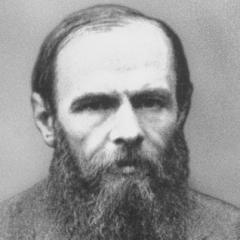
Author

Fyodor Dostoevsky
Fyodor Dostoevsky

A renowned Russian novelist and a pioneer of psychological novels. His works deeply reveal the complexity of human nature and the injustice of society, having a profound impact on literature worldwide. more

You May Also Like

“It is the interplay between the brilliance of our joy and the abyss of our suffering that defines us. We are creatures of light born from the womb of darkness, forever navigating the dichotomy of exaltation and despair. This oscillation—this profound dance between the zeniths of happiness and the nadirs of sorrow—carves the depth of our souls, teaching us that within the crucible of our trials lies the alchemy of our greatest triumphs. Herein lies the paradox of our existence: that it is through the very act of confronting our agony, we discover the boundless realms of our bliss.”

“To open up to Truth you have to first be so utterly hopeless and to the point you see no good way out of this life. That is where you are pushed to find out for yourself, whether it even exists or not, whether you have a chance, because Truth, Reality, or what some true teachers call God cannot be found in those parts of us that are familiar or known. If you're comfortable with your acquired ideas, your life situation and memories you will never pursue this”

“Was there nothing left in this world that was worth opening your eyes and fighting for? Would the bad guys always win? Are our efforts to live in peace simply doomed to failure? Will the bad guys always be bad guys? Will the good guys spend their whole lives taking punches and throwing rocks into the water with all of their might and getting nothing more in return than a ridiculous sploosh and the shame of failure?”

“There is no time in what you are going through. Your suffering is a place, and you don't know whether you can ever leave this place. You don't even have enough hope to wish that it be over faster. Faster doesn't exist, any more than time itself. You are not alive enough to measure it. You live in a present of incessant pain.”

“هذا الشر الذي لا يصد عن اللهو. يقاتل ويقتل ويحظى بكل الاحترام. يقسو ويستبد هازئًا بالعواقب وله ضحكة تجلجل فتملأ الآفاق. له لذة في العبث بالضعفاء ويسمر في المآثم ويغني فوق شواهد القبور. الموت يدنو مني وهو لايزال يضحك ساخرًا. القتيل في التراب والقاتل ضائع وفي كوخي بكاء على الإثنين. ضحكة الطفولة في الحديقة استحالت مع الأيام عبوسة غارقة في الدمع. وفي الداخل بقية جسدي يتوجع. لماذا هذا العناء كله وأين صفو الأحلام أين؟”

“The moments of contemplating that animal fear, when the criminal sees that all is lost, but still struggles, still means to struggle, the moments when every instinct of self-preservation rises up in him at once and he looks at you with questioning and suffering eyes, studies you, your face, your thoughts, uncertain on which side you will strike, and his distracted mind frames thousands of plans in an instant, but he is still afraid to speak, afraid of giving himself away! This purgatory of the spirit, this animal thirst for self-preservation, these humiliating moments of the human soul, are awful, and sometimes arouse horror and compassion for the criminal even in the lawyer.”