Quotessence
Home / Quotes / Quote by Simon Critchley

Quote by Simon Critchley

“Obama dreams of a society without power relations, without the agonism that constitutes political life. Against such a position one might assert that justice is always an agon, a conflict, and to refuse this assertion is to consign human beings to wallow in some emotional, fusional balm.”

Quote by Simon Critchley

Author
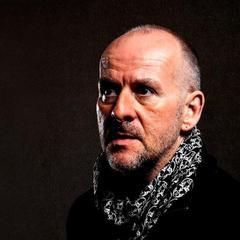
Simon Critchley
Simon Critchley

Simon Critchley is a British philosopher known for his contributions to existentialism and ethics. His work covers a wide range of topics, including political philosophy, aesthetics, and moral philosophy. Critchley's research interests include the ideas of philosophers such as Heidegger, Nietzsche, and Foucault. more

You May Also Like

“The yearning for the common good comes from the refusal to accept that perhaps Americans have very little in common apart from the elements of a sometimes successful civil religion based around a sentimental, indeed sometimes teary-eyed, attachment to the constitution and a belief in the quasi-divine wisdom of the founding fathers.”

“Being anthropologically respectful of all faiths means being committed to none, and being left to drift without an anchor for one's most deeply held beliefs. To have such an anchor means being committed to a specific community. The only way Obama can overcome his sense of detachment and resolve his mother's dilemma is through a commitment to Christianity.”

“Here we observe the basic obsessive fantasy of Žižek's position: do nothing, sit still, prefer not to, like Melville's Bartleby, and silently dream of a ruthless violence, a consolidation of state power into one man's hands, an act of brutal physical force of which you are the object or the subject or both at once.”

“If the denial of death is self-hatred, as it is to deny our freedom and live in fear of death (which is to say, to live in a form of bondage), then the acceptance and affirmation of death is indeed a form of self-love. But I'd want to make a distinction between a form of self-love which is essential to what it means to be human, and a narcissism of self-regard, like Rousseau's distinction between amour de soi and amour propre, self-love and pride.”

“I am opposing it with an idea of the history of philosophy as a history of philosophers, that is, a history of mortal, fragile and limited creatures like you and I. I am against the idea of clean, clearly distinct epochs in the history of philosophy or indeed in anything else. I think that history is always messy, contingent, plural and material. I am against the constant revenge of idealism in how we think about history.”