“What did Kiyoaki mean by his question? If one were forced to hazard a guess, it would be that he was trying to say that he had no interest in anything at all. He thought of himself as a thorn, a small, poisonous thorn jabbed into the workmanlike hand of his family. And this was his fate simply because he had acquired little elegance. A mere fifty years before, the Matsugaes had been a sturdy, upright samurai family, no more, eking out a frugal existence in the provinces. But in a brief span of time, their fortunes had soared. By Kiyoake’s time, the first traces of refinement were threatening to take hold on a family that, unlike the court of nobility, had enjoyed centuries of immunity to the virus of elegance. And Kiyoake, like an ant that senses the approaching flood, was experiencing the first intimations of his family’s rapid collapse. His elegance was the thorn. And he was well aware that his aversion to coarseness, his delight in refinement, were futile; he was a plant without roots. Without meaning to undermine his family, without wanting to violate its traditions, he was condemned to do so by his very nature. And this poison would stunt his own life as it destroyed his family. The handsome young man felt that this futility typified his existence. (p13.)”
Quote by Yukio Mishima
Book:Spring Snow
Work
Spring Snow
Spring Snow is a richly detailed novel that delves into the lives of its characters in a remote village, capturing the complexities of human emotions and the impact of historical events on individual lives. more
Author
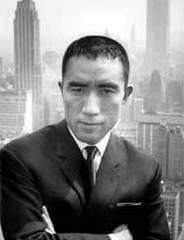
Yukio Mishima
Yukio Mishima was a Japanese author and playwright, a prominent figure in post-war Japanese literature. His works, characterized by a fusion of traditional Japanese aesthetics and modernist techniques, often explored themes of tradition, ritual, and the samurai code. more
You May Also Like
Source: Fairytales for Lost Children
Source: The Case Against the Modern World: A Crash Course in Traditionalist Thought
Source: Dream big!: See your bigger picture!
Source: Leaders' Watchwords
Source: Leaders' Ladder
Source: Resurrection