Quotessence
Home / Quotes / Quote by Charles C. Mann

Quote by Charles C. Mann

“When I last spoke to Borlaug, a few years before he passed away, I asked him about the past criticisms. Critics, he said, never wanted to answer the counterfactual question: Where would the world be today if we had the same growth in population and affluence but none of the yield increases of the Green Revolution? Overuse of fertilizer, water-logging soils, loading up land with toxic salts from badly run irrigation schemes—these were real issues, he said. But wouldn't you rather have these for problems than the kind of hunger we had in 1968? He asked me if I had ever been to a place where most of the people weren't getting enough to eat. "Not just poor, but actually hungry all the time," he said. I told him that I hadn't been to such a place. "That's the point," he said. "When I was getting started, you couldn't avoid them.”

Quote by Charles C. Mann

Work

Author

Charles C. Mann
Charles C. Mann

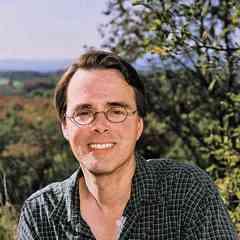
Charles C. Mann is an American journalist and author known for his profound insights into human history and the natural environment. His works often deal with complex historical themes and are praised for their extensive research and engaging narrative style. more

You May Also Like

“Just in the last two centuries, tuberculosis caused over a billion human deaths. One estimate, from Frank Ryan's "Tuberculosis: The Greatest Story Never Told", maintains that TB has killed around one in seven people who've ever lived. COVID-19 displaced tuberculosis as the world's deadliest infectious disease from 2020 through 2022, but in 2023, TB regained the status it has held for most of what we know of human history. Killing 1,2500,000 people, TB once again became our deadliest infection. What's different now from 1804 or 1904 is that tuberculosis is curable, and has been since the mid-1950s. We know how to live in a world without tuberculosis. But we choose not to live in that world.”

“In 2018, Linarejos Moreno, a professor at the Faculty of Fine Arts at the Complutense University of Madrid, held a solo exhibition titled Cloud Chamber, in which she brought together the genius of abstraction with a nuclear physics experiment designed to reveal the decay of subatomic particles. The year 1911 marks both the birth of abstraction in art, through Wassily Kandinsky’s foundational work, and the invention of the cloud chamber by C.T.R. Wilson, which enabled the first visual observations of cosmic rays. Both figures were concerned with the traceability of points and lines on a plane, an investigation that directly inspired Kandinsky’s second major theoretical work, Point and Line to Plane. This unexpected encounter, which subtly suggests that the foundation of reality may not align with the constructs of an abstracted universe distanced from nature, offers a glimpse into the dynamic interplay between mythos and logos. The guiding axiom of our journey under the manifesto of Science and Poetry is the desire to envision new frontiers where the dervishes who wander at the boundaries of Nature and the scientists of our age converge within the cosmic pattern. The irrational ratios of Nature are a manifesto of the geometry of reality. This manifesto is no less significant for the miraculous concord it establishes with poetic narration, the very instrument by which we convey feeling and thought. B. C. C. – On Nature and Against Method, Reflections & Propositions, XXV”

“In our work titled “On Nature and Against Method, Reflections & Propositions,” in Proposition XXXVII, we stated the following: The ancient Ionian thinkers and natural philosophers who had, in a sense, transformed into the fire of Heraclitus, namely the masters of the Milesian school, the cradle of civilization, await the reemergence of this Ionian vision, which we have described as a kind of reverie, within Blue Anatolia. Science, which is now struggling within a profound darkness of processes and risks coming to a complete standstill in its progress, may yet be revitalized by minds that will once again inherit and internalize the approaches of these Ionian thinkers toward nature. Today more than ever, there is a need for Thales’ water and magnetism, Anaximenes’ breath, Anaximander’s apeiron, Anaxagoras’ ordering mind, and Xenophanes of Colophon’s counter-awareness, his narratives, and his poetic sensibility. In this spirit, alongside our discourse on contemporary physics and astrophysics, we have undertaken a postulate not previously articulated, one that unifies nuclear strong interactions, neutron star physics, biophysics, and topology under a single framework, where a topology-centered new geometry prevails rather than the conventional hierarchy of physical forces. Just as the masters of the Ionian tradition, Empedocles and Anaximander, conveyed their insights through a poetic feast in their works On Nature, we too have woven these ideas into the fabric of nature through our poems. In doing so, we have prioritized form over meter. This form, inseparable from consciousness, existence, and knowledge belonging to this new geometry, establishes a new morphology, acting as a boundary condition that shelters our words, preventing them from being dispersed within the labyrinths of the cosmos. In the philosophical walks by the lakeside, frequently contemplated by Gödel and Einstein, and placed, in Paul Benacerraf’s terms, upon paired circles that avoid reducing our postulate to either of the two axes of philosophy, ontology and epistemology, we instead enable a holistic interaction between them. While incomplete encounters within mathematical and geometric solution spaces find completion in Hilbert space, transcendent reflections on nature and our challenges to method form the essence of this work. In this context, rather than a conventional poetry book or a mere collection of arbitrary texts, what emerges is a meta-text: a systematic inquiry into nature in which intuition and science are interwoven, expressed through poetic form. Moving beyond contemporary literary tendencies that often confine poetry within blocks of prose or reduce it to brief expressions relegated to journal margins, we have tested poetry as not a decorative element but as a constitutive principle of existence. These transitions, imbued with reason and transcendence between layers of perception, have brought us one step closer to the harmony of poetic expression and, ultimately, to mathematics and geometry, the language of the universe itself. May this work serve as a guiding cosmological atlas for an intellect that seeks both truth and itself across interwoven meta-texts, in its comprehension of the infinite nature of reality.”