“And when children begin to use their reason, fathers and mothers should take great pains to fill their hearts with the fear of God. This the good Queen Blanche did most earnestly by St. Louis, her son: witness her oft-repeated words, "My son, I would sooner see you die than guilty of a mortal sin;" words which sank so deeply into the saintly monarch's heart, that he himself said there was no day on which they did not recur to his mind, and strengthen him in treading God's ways.”
Quote by Saint Francis de Sales
Author
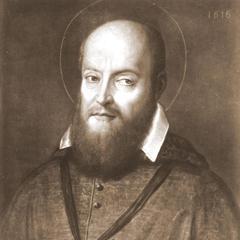
Saint Francis de Sales
Saint Francis de Sales, born on August 16, 1567, and died on December 28, 1622, was the Bishop of Geneva. Known for his profound theological knowledge and exceptional pastoral skills, he is hailed as the 'Saint of France'. During the Reformation period, he dedicated himself to reconciling Catholicism with Protestantism, and his writings have had a profound impact on subsequent generations. more
You May Also Like
Source: The Book of the Damned: The Original Classic of Paranormal Exploration
“The scientist is a lover of truth for the very love of truth itself, wherever it may lead.”
Source: My Beliefs
“A fool, Mr, Edgeworth, is one who has never made an experiment.”
Source: Scientific Autobiography: and Other Papers
“As I grew up I was fervently desirous of becoming acquainted with Nature.”
Source: Ornithological Biography, Or an Account of the Habits of the Birds of the United States of America: Accompanied by Descriptions of the Objects Represented in the Work Entitled The Birds of America, and Interspersed with Delineations of American Scenery and Manners
Source: Eight Lectures on Theoretical Physics Delivered at Columbia University in 1909
Source: Phytologia; Or, The Philosophy of Agriculture and Gardening: With the Theory of Draining Morasses, and with an Improved Construction of the Drill Plough
Source: The Botanic Garden: A Poem, in Two Parts: Part I. Containing The Economy of Vegetation. Part II. The Loves of the Plants
Source: The new science: 3 complete works: Where is science going? The universe in the light of modern physics; The philosophy of physics
Source: John Muir: Nature Writings