Quotessence
Home / Quotes / Quote by Fritjof Capra

Quote by Fritjof Capra

“Both the physicist and the mystic want to communicate their knowledge, and when they do so with words their statements are paradoxical and full of logical contradictions.”

Quote by Fritjof Capra

Author
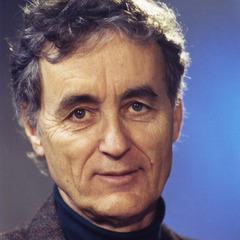
Fritjof Capra
Fritjof Capra

Fritjof Capra (born February 1, 1939) is an Austrian-born American physicist, systems theorist, and ecological thinker. He is best known for his 1975 book 'The Tao of Physics', which explores parallels between modern physics and Eastern mysticism. Capra advocates for deep ecology and systems thinking, integrating science, society, and ecology. His works, including 'The Turning Point' and 'The Web of Life', have influenced global environmental movements and interdisciplinary studies. He co-founded the Center for Ecoliteracy in Berkeley, California, promoting sustainable education. Capra's ideas have sparked both acclaim and criticism, but he remains a key figure in paradigm shift discourse. more

You May Also Like

“From that night on, the electron-up to that time largely the plaything of the scientist-had clearly entered the field as a potent agent in the supplying of man's commercial and industrial needs... The electronic amplifier tube now underlies the whole art of communications, and this in turn is at least in part what has made possible its application to a dozen other arts. It was a great day for both science and industry when they became wedded through the development of the electronic amplifier tube.”

“I have spent much time in the study of the abstract sciences; but the paucity of persons with whom you can communicate on such subjects disgusted me with them. When I began to study man, I saw that these abstract sciences are not suited to him, and that in diving into them, I wandered farther from my real object than those who knew them not, and I forgave them for not having attended to these things. I expected then, however, that I should find some companions in the study of man, since it was so specifically a duty. I was in error. There are fewer students of man than of geometry.”

“If there were some solitary or feral man, the passions of the soul would be sufficient for him; by them he would be conformed to things in order that he might have knowledge of them. But because man is naturally political and social, there is need for one man to make his conceptions known to others, which is done with speech. So significant speech was needed if men were to live together. Which is why those of different tongues do not easily live together.”

“In this communication I wish first to show in the simplest case of the hydrogen atom (nonrelativistic and undistorted) that the usual rates for quantization can be replaced by another requirement, in which mention of "whole numbers" no longer occurs. Instead the integers occur in the same natural way as the integers specifying the number of nodes in a vibrating string. The new conception can be generalized, and I believe it touches the deepest meaning of the quantum rules.”

“It will be possible in a few more years to build radio controlled rockets which can be steered into such orbits beyond the limits of the atmosphere and left to broadcast scientific information back to the Earth. A little later, manned rockets will be able to make similar flights with sufficient excess power to break the orbit and return to Earth. (1945) [Predicting communications satellites.]”

“It's humbling to realise that the developmental gulf between a miniscule ant colony and our modern human civilisation is only a tiny fraction of the distance between a Type 0 and a Type III civilisation - a factor of 100 billion billion, in fact. Yet we have such a highly regarded view of ourselves, we believe a Type III civilisation would find us irresistible and would rush to make contact with us. The truth is, however, they may be as interested in communicating with humans as we are keen to communicate with ants.”

“One orbit, with a radius of 42,000 kilometers, has a period of exactly 24 hours. A body in such an orbit, if its plane coincided with that of the Earth's equator, would revolve with the Earth and would thus be stationary above the same spot on the planet. It would remain fixed in the sky of a whole hemisphere ... [to] provide coverage to half the globe, and for a world service three would be required, though more could be readily utilized. (1945) [Predidicting geosynchronous communication satellites]”