Quotessence
Home / Quotes / Quote by Gianfranco Zola

Quote by Gianfranco Zola

Author

Gianfranco Zola
Gianfranco Zola

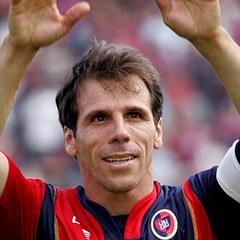
Gianfranco Zola, born on July 5, 1966, is a legendary Italian former professional footballer. Known for his exceptional skill, goal-scoring ability, and leadership, Zola played for several top clubs throughout his career, including Napoli, Barcelona, and Chelsea. He helped Napoli win the Italian Serie A championship in the early 1990s and was awarded the Ballon d'Or in 1996. After retirement, Zola continued to be active in the football world, serving as a coach and football analyst. more

You May Also Like

“The intention of Paul VI with regard to what is commonly called the Mass, was to reform the Catholic liturgy in such a way that it should almost coincide with the Protestant liturgy - but what is curious is that Paul VI did that to get as close as possible to the Protestant Lord's supper... there was with Paul VI an ecumenical intention to remove, or at least to correct, or at least to relax, what was too Catholic, in the traditional sense, and, I repeat, to get the Catholic Mass closer to the Calvinist Mass.”

“When I read the documents relative to the Modernism, as it was defined by Saint Pius X, and when I compare them to the documents of the II Vatican Council, I cannot help being bewildered. For what was condemned as heresy in 1906 was proclaimed as what is and should be from now on the doctrine and method of the Church. In other words, the modernists of 1906 were, somewhat, precursors to me. My masters were part of them. My parents taught me Modernism. How could Saint Pius X reject those that now seem to be my precursors?”

“In Kafka we have the modern mind, seemingly self-sufficient, intelligent, skeptical, ironical, splendidly trained for the great game of pretending that the world it comprehends in sterilized sobriety is the only and ultimate real one – yet a mind living in sin with the soul of Abraham. Thus he knows Two things at once, and both with equal assurance: that there is no God, and that there must be God.”