“The poor yield to the rich, the common people to the upper ten, the servants to their masters, the ignorant to the scholars; but there is nobody who does not imagine that he is really better than others.”
Quote by John Calvin
Work
Golden Booklet of the True Christian Life
This book is a classic work that delves into the spiritual and ethical aspects of Christian life, offering insights into the path to spiritual growth and salvation. more
Author
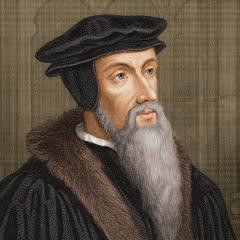
John Calvin
John Calvin (July 10, 1509 - May 27, 1564) was a significant figure in the 16th-century Protestant Reformation and the founder of the Calvinist branch of Protestantism. He was a theologian, philosopher, and Christian reformer whose theological ideas had a profound impact on subsequent generations. more
You May Also Like
“Everyone flatters himself and carries a kingdom in his breast.”
Source: Golden Booklet of the True Christian Life
Source: Golden Booklet of the True Christian Life
Source: Golden Booklet of the True Christian Life
Source: Golden Booklet of the True Christian Life
Source: Golden Booklet of the True Christian Life
Source: Golden Booklet of the True Christian Life
Source: Golden Booklet of the True Christian Life
Source: Golden Booklet of the True Christian Life