Quotessence
Home / Quotes / Quote by Ralph Waldo Emerson

Quote by Ralph Waldo Emerson

Work

The Essential Writings of Ralph Waldo Emerson

This book includes seminal works by Ralph Waldo Emerson, a prominent figure in American literature and philosophy. It features his most famous essays, such as 'Self-Reliance' and 'Nature', offering insights into his ideas on the nature of the individual, the role of the soul, and the importance of intuition and self-reliance. more

Author
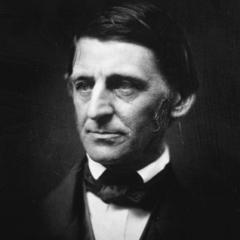
Ralph Waldo Emerson
Ralph Waldo Emerson

American essayist, poet, and philosopher. Born on May 25, 1803, and died on April 27, 1882. Known for his transcendentalist philosophy, his works have had a profound impact on literature and the intellectual world. more

You May Also Like

“Only you know your circumstances, your energy level, the needs of your children, and the emotional demands of your other obligations. Be wise during intensive seasons of your life. Cherish your agency, and don’t give it away casually. Don’t compare yourself to others — nearly always this will make you despondent. Don’t accept somebody else’s interpretation of how you should be spending your time. Make the best decision you can and then evaluate it to see how it works.”

“Be spiritually independent enough that your relationship with the Savior doesn't depend on your circumstances or on what other people say and do. Have the spiritual independence to be a Mormon--the best Mormon you can--in your own way. Not the bishop's way. Not the Relief Society president's way. Your way.”

“We the undersigned, intend to establish an instruction and training institution which differs from the common elementary schools principally in that it will embrace, outside of (in addition to) the general and elementary curriculum, all branches of the classical high school, which are necessary for a true Christian and scientific education, such as: Religion, the Latin, Greek, Hebrew, German, French and English languages; History, Geography, Mathematics, Physics, natural history, Introduction to Philosophy, Music, and Drawing.”

“How could one comfort a disturbed person? He is already assailed with doubts about his faith. He would have to despair with such a doctrine. Rather one must seek to convince him that the Savior is there for him, has already forgiven him, and has already accepted him. As soon as one makes faith even in the least a requirement for justification, one takes from such a person all the comfort of the Gospel.”