Quotessence
Home / Quotes / Quote by George Orwell

Quote by George Orwell

Work

Facing Unpleasant Facts: Narrative Essays

This book is a compilation of essays that delve into a range of social and political topics, offering insights and perspectives on contemporary issues. more

Author
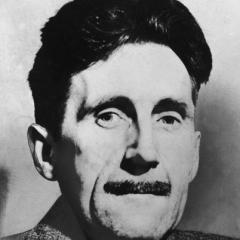
George Orwell
George Orwell

George Orwell, born Eric Arthur Blair, was a British novelist and political critic. Known for his sharp social criticism and profound insights into totalitarianism, Orwell is best remembered for his novels '1984' and 'Animal Farm', which remain influential to this day. more

You May Also Like

“The sea has formed the English character and the essential England is to be found in those who follow it. From blue waters they have learned mercifulness, and they have also learned - in the grimmest of schools - precision and resolution. The sea endures no makeshifts. If a thing is not exactly right it will be vastly wrong.”

“We forget today that Britain still depends for its livelihood and, indeed, its day-to-day survival, on the sea. But the Royal Navy is now pitifully small and has been reduced in size by the current Government, seeking economies to finance its social programmes. Fine while there is no threat to our security. But what use would schools and hospitals be if we could not protect our imports?”

“There were nights when he took a deal more rum and water than his head could carry; and then he would sometimes sit and sing his wicked old wild sea-songs, minding nobody... Often I have heard the house shaking with Yo-ho-ho and a bottle and rum, all the neighbours joining in for dear life with the fear of death upon them and each singing louder than the other to avoid remark. Fiften men on the dead man's chest, Yo-ho-ho and a bottle of rum! Drink and the devil have done for the rest. Yo-ho-ho and a bottle of rum!”

“Here ends the story of a ship, but there will always be other ships, for we are an island race. Through all our centuries, the sea has ruled our destiny. There will always be other ships and men to sail in them. It is these men, in peace or war, to whom we owe so much. Above all victories, beyond all loss, in spite of changing values in a changing world, they give to us, their countrymen, eternal and indomitable pride.”

“Our faith in democracy, personal freedoms and human 'rights', and the other comforting prescriptions of the humanist liberal credo stem from the supremacy of maritime over territorial power. Pragmatists may deplore this as crude determinism, as another vain attempt to construct a general theory of history. They should reflect on the sort of political philosophy and structures we might now adhere to had the Habsburgs, Bourbons, Bonaparte, Hitler, Stalin or his heirs prevailed in the titanic world struggles of the past four centuries.”

“The reason territorial monarchs failed time after time against maritime powers was not that absolutist, non-consensual governments were incapable of building great fleets in peace - quite the reverse - but that they were unable to fund them in the crises of war. Mainly this was because they were forced to divert resources from the fleet to their armies, to fight territorial rivals frequently financed by their maritime enemy from the profits of sea trade.”

“Wealth from trade was the mainspring of Western material advance; the visible agents of change were great guns. These came of age in Europe in the 15th century. On land their potency in reducing castle walls favoured central over local power, since in general only monarchs could afford siege-trains; so nation-states were consolidated and extended into great territorial empires. At sea, guns transformed sailing ships into mobile castles virtually impregnable to opponents who lacked equally powerful ordnance. With the ocean-going gunned warship, western Europe began to extend around the globe.”

“Philip could not have wanted to annex England militarily, since this would have opened another costly occupation struggle, and brought France in against him. He might, however, neutralize Elizabth by supporting her internal Catholic enemies, even provoking civil war.”