“Morals excite passions, and produce or prevent actions. Reason of itself is utterly impotent in this particular. The rules of morality, therefore, are not conclusions of our reason.”
Quote by David Hume
Work
A Treatise on Human Nature: Being an Attempt to Introduce the Experimental Method of Reasoning Into Moral Subjects; and Dialogues Concerning Natural Religion
This book is a comprehensive philosophical treatise that delves into the nature of human morality and the existence of natural religion. It employs an experimental approach to reasoning and presents a series of dialogues to discuss these complex subjects. more
Author
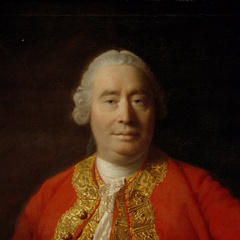
David Hume
David Hume, born on May 7, 1711, in Edinburgh, Scotland, and died on August 25, 1776, was an outstanding philosopher, historian, and economist. Known for his contributions to empiricism and skepticism, his works have had a profound impact on subsequent philosophy, economics, and psychology. more
You May Also Like
Source: An Enquiry Concerning Human Understanding ; [with] A Letter from a Gentleman to His Friend in Edinburgh ; [and] An Abstract of a Treatise of Human Nature
Source: An Enquiry Concerning Human Understanding
Source: Essays Moral, Political, Literary: Revision of Great Book
Source: The philosophical works of David Hume
Source: The Philosophical Works of David Hume ... Containing Dialogues Concerning Natural Religion, Essays on the Immortality of the Soul, Suicide ... &c. A New Edition
“All inferences from experience... are effects of custom, not of reasoning.”
Source: An Enquiry Concerning Human Understanding ; [with] A Letter from a Gentleman to His Friend in Edinburgh ; [and] An Abstract of a Treatise of Human Nature