“For the same reason that the members of the State legislatures will be unlikely to attach themselves sufficiently to national objects, the members of the federal legislature will be likely to attach themselves too much to local objects.”
Quote by James Madison
Work
The Federalist, on the New Constitution, Written in the Year 1788
Composed by Alexander Hamilton, James Madison, and John Jay, this collection of essays advocates for the ratification of the U.S. Constitution, offering insights into the structure and function of the federal government. more
Author
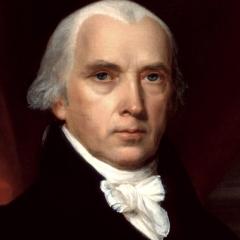
James Madison
James Madison, the 4th President of the United States, was born on March 16, 1751, and died on June 28, 1836. He was a key figure in drafting the U.S. Constitution and had a profound impact on the political system of the United States. more
You May Also Like
Source: Memoirs of the life and writings of Benjamin Franklin ...
Source: The Writings of James Madison: 1787-1790
Source: The Federalist, on the New Constitution, Written in the Year 1788
Source: The Federalist Papers: A Collection of Essays Written in Favour of the New Constitution
Source: The Federalist Papers: A Collection of Essays Written in Favour of the New Constitution
Source: The Essential Federalist: A New Reading of the Federalist Papers
Source: Leonard Cohen on Leonard Cohen