“What signifies knowing the Names, if you know not the Natures of things.”
Quote by Benjamin Franklin
Work
Poor Richard's Almanack
Poor Richard's Almanack is a yearly publication that includes a variety of content ranging from practical advice on farming and weather predictions to moral and philosophical maxims. Authored by Benjamin Franklin, it became a popular source of guidance and entertainment during the 18th century. more
Author
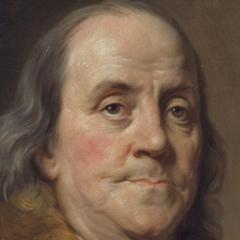
Benjamin Franklin
Benjamin Franklin was a prominent figure in American history, serving as one of the Founding Fathers of the United States. He was a statesman, scientist, inventor, and writer, born on January 17, 1706, and died on April 17, 1790. Franklin is renowned for his contributions to electricity, his support for the American colonial independence movement, and his successful diplomatic efforts in France. more
You May Also Like
Source: The Life of Benjamin Franklin: Written by Himself. Now First Edited from Original Manuscripts and from His Printed Correspondence and Other Writings
“When you speak to a man, look on his eyes; when he speaks to you, look on his mouth.”
Source: The Way to Wealth and Poor Richard's Almanac
“Success has ruined many a man.”
Source: Poor Richard: An Almanack
“The used key is always bright.”
Source: Maxims and Morals from Dr. Franklin: Being Incitements to Industry, Frugality, and Prudence
“Is there anything men take more pains about than to render themselves unhappy?”
Source: The Way to Wealth and Poor Richard's Almanac
Source: Memoirs of the life and writings of Benjamin Franklin ...
Source: The Political Thought of Benjamin Franklin
Source: The select works of Benjamin Franklin