Quotessence
Home / Quotes / Quote by Madeleine L'Engle

Quote by Madeleine L'Engle

Work

A Wrinkle in Time Trilogy

The trilogy includes 'A Wrinkle in Time,' 'A Wind in the Door,' and 'A Swiftly Tilting Planet.' It combines elements of fantasy and science fiction, blending complex scientific concepts with a compelling narrative that follows Meg Murry and her quest to find her father, who has been captured by the evil IT. The series is known for its imaginative storytelling and its exploration of themes such as love, loss, and the nature of existence. more

Author
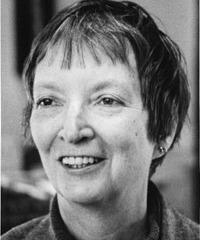
Madeleine L'Engle
Madeleine L'Engle

American writer, born on November 29, 1918, and died on September 6, 2007. Madeleine L'Engle is renowned for her science fiction and fantasy novels, with her most famous work being 'A Wrinkle in Time'. more

You May Also Like

“One of the ways of stopping science would be only to do experiments in the region where you know the law. But experimenters search most diligently, and with the greatest effort, in exactly those places where it seems most likely that we can prove our theories wrong. In other words, we are trying to prove ourselves wrong as quickly as possible, because only in that way can we find progress.”

“Our inheritance of well-founded, slowly conceived codes of honor, morals and manners, the passionate convictions which so many hundreds of millions share together of the principles of freedom and justice, are far more precious to us than anything which scientific discoveries could bestow.”

“A reporter called on Edison to interview him about a substitute for lead in the manufacture of storage batteries that the scientist was seeking. Edison informed the man that he had made 20,000 experiments but none had worked. "Aren't you discouraged by all this waste of effort?" the reporter asked. Edison: "Waste! There's nothing wasted. I have discovered 20,000 things that won't work."”

“Even granting that the genius subjected to the test of critical inspection emerges free from all error, we should consider that everything he has discovered in a given domain is almost nothing in comparison with what is left to be discovered.”

“These long chains of perfectly simple and easy reasonings by means of which geometers are accustomed to carry out their most difficult demonstrations had led me to fancy that everything that can fall under human knowledge forms a similar sequence; and that so long as we avoid accepting as true what is not so, and always preserve the right order of deduction of one thing from another, there can be nothing too remote to be reached in the end, or to well hidden to be discovered.”