Quotessence
Home / Quotes / Quote by Charles D'Ambrosio

Quote by Charles D'Ambrosio

“I suppose I like certainty as much as anyone else, but I also feel that the hidden costs are high, that we pay a heavy price for our convictions. This is a human issue as well as a writing issue - at least in the personal essay as I practice it. Any real essayist knows that certainty is an editorial decision, arrived at not through conviction but through suppression, the denial of a whole range of possibilities, of alternatives that we jettison, sometimes necessarily, in order to steady the ship.”

Quote by Charles D'Ambrosio

Author
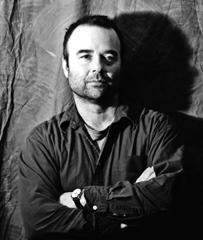
Charles D'Ambrosio
Charles D'Ambrosio

Charles D'Ambrosio is an American short story writer known for his concise and profound writing style. His works often explore themes of human relationships, moral dilemmas, and the essence of human existence. Born in 1958, D'Ambrosio's short stories have gained widespread recognition in the literary world. more

You May Also Like

“Too much me is annoying under any circumstance, but too much me in an essay, however personal, would mar the art. My "character" in the essay is more like a perspective, an angle of vision, a complicating factor, a questioning presence. I don't sit on the sidelines or pretend to objectivity; and I'm not afraid to stick my neck out or to be revealing and vulnerable.”

“My presence isn't simply about "character" - I'm present in every part and particle of the thing, in the sound and rhythm of the sentences, in the shifting tones and the selection of details, in the comedy, the sadness, and the confusion. For the space of an essay, I'm the air you breathe, everywhere and nowhere. With a personal essay, I don't think you'd want it any other way. You ought to have the sense of an encounter, the impression of having met someone. In my essays, for better or worse, that someone is me.”

“Sometimes I'll have an end in mind, but it's always false, always corny, just a dumb idea anyone could have, sitting on a barstool. An abstract thesis with no real life inside it. And then I start writing and the writing itself confounds me, taking away the comfort of knowing the end in advance. How is that even possible? Doesn't the conclusion come at the end? How can you begin with one - that seems odd, right?”