Quotessence
Home / Quotes / Quote by Jamie Redknapp

Quote by Jamie Redknapp

Author

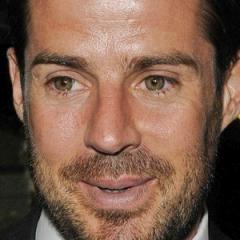
Jamie Redknapp
Jamie Redknapp

Jamie Redknapp is a celebrated English soccer player. Born on June 25, 1973, he has made a significant impact on the sport throughout his career. Redknapp has played for several top clubs in England and has also represented the national team. His playing style and leadership qualities have earned him a place in the annals of soccer history. more

You May Also Like

“I know some photographs that are extraodrinary in their power and conviction, but it is difficult in photography to overcome the superficial power or subject; the concept and statement must be quite convincing in themselves to win over a dramatic and compelling subject situation.”

“The contemporary artist...is not bound to a fully conceived, previsioned end. His mind is kept alert to in-process discovery and a working rapport is established between the artist and his creation. While it may be true, as Nathan Lyons stated, 'The eye and the camera see more than the mind knows,' is it not also conceivable that the mind knows more than the eye and the camera can see?”

“As I became aware that all things have unique spatial and temporal qualities which visually define and relate them, I began to perceive the things I was photographing not as objects but as events. Working to develop my skills of perceiving and symbolizing these event qualities, I discovered the principle of opposites. When, for example, I photographed the smooth, luminous body of a woman behind a dirty cobwebbed window, I found that the qualities of each event were enhanced and the universal forces which they manifested were more powerfully evoked.”

“In a photograph, if I am able to evoke not alone a feeling of the reality of the surface physical world but also a feeling of the reality of existence that lies mysteriously and invisibly beneath its surface, I feel I have succeeded. At their best, photographs as symbols not only serve to help illuminate some of the darkness of the unknown, they also serve to lessen the fears that too often accompany the journeys from the known to the unknown.”