“He who thinks and thinks for himself, will always have a claim to thanks; it is no matter whether it be right or wrong, so as it be explicit. If it is right, it will serve as a guide to direct; if wrong, as a beacon to warn.”
Quote by Jeremy Bentham
Work
Benthamiana: Or Select Extracts from the Works of Jeremy Bentham. With an Outline of His Opinions on the Principal Subjects Discussed in His Works
This book is a collection of extracts from the extensive works of Jeremy Bentham, a prominent philosopher and social reformer. It includes an outline that summarizes his views on various principal subjects that were central to his intellectual pursuits. more
Author
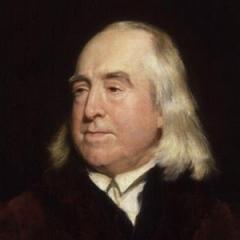
Jeremy Bentham
Jeremy Bentham was an English philosopher, jurist, and social reformer who lived from February 15, 1748, to June 6, 1832. He is best known for his work in moral philosophy, political theory, and legal reform, particularly his advocacy for the principle of utilitarianism. more
You May Also Like
Source: An Introduction to the Principles of Morals and Legislation
“Ah, music! What a beautiful art! But what a wretched profession!”