“The First and Fourteenth Amendments say that Congress and the States shall make "no law" which abridges freedom of speech or of the press. In order to sanction a system of censorship I would have to say that "no law" does not mean what it says, that "no law" is qualified to mean "some" laws. I cannot take this step.”
Quote by William O. Douglas
Author
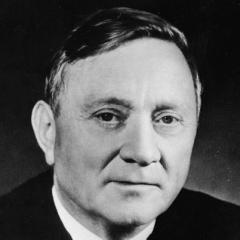
William O. Douglas
William O. Douglas was a former Associate Justice of the Supreme Court of the United States. Born on October 16, 1898, and passing away on January 19, 1980, he is renowned for his contributions to constitutional interpretation. During his tenure on the Supreme Court, Douglas advocated for liberal judgments, particularly in the areas of the First and Fifth Amendments, and had a profound impact on the American legal and judicial system. more
You May Also Like
“Corruption is no stranger to Washington; it is a famous resident.”
Source: All Honorable Men
Source: Papers: Harold C. Syrett, Editor; Jacob E. Cooke, Associate Editor
Source: The Federalist Papers & Anti-Federalist Papers: Complete Edition of the Pivotal Constitution Debate: Including Articles of Confederation (1777), Declaration of Independence, U.S. Constitution, Bill of Rights & Other Amendments – All With Founding Fathers’ Arguments & Decisions about the Constitution
Source: Memoir, Correspondence, and Miscellanies: From the Papers of Thomas Jefferson
“Anything that keeps a politician humble is healthy for democracy.”