“But every difference of opinion is not a difference of principle. We have been called by different names brethren of the same principle. We are all Republicans, we are all Federalists.”
Quote by Thomas Jefferson
Work
The Essential Jefferson
This book compiles a selection of Thomas Jefferson's most significant works, including his political essays, correspondence, and personal reflections. It offers insight into his ideas on democracy, governance, and the role of the individual in society. The collection provides a detailed look at Jefferson's intellectual development and his influence on the formation of the United States. more
Author
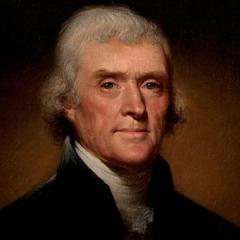
Thomas Jefferson
Thomas Jefferson was the third President of the United States, a distinguished politician, philosopher, architect, and scientist. He was born on April 13, 1743, and died on July 4, 1826. Jefferson advocated for democracy and freedom in politics and was one of the main authors of the Declaration of Independence. His political ideas had a profound impact on the founding and development of the United States. more
You May Also Like
“I view great cities as pestilential to the morals, the health, and the liberties of man.”
Source: Jefferson: Political Writings
“Some other natural rights... [have] not yet entered into any declaration of rights.”
“Man [is] a rational animal, endowed by nature with rights and with an innate sense of justice.”
Source: Memoir, correspondence, and miscellanies from the papers of T. Jefferson
Source: The writings of Thomas Jefferson: being his autobiography, correspondence, reports, messages, addresses, and other writings, official and private
“That liberty [is pure] which is to go to all, and not to the few or the rich alone.”
“The Giver of life gave it for happiness and not for wretchedness.”
Source: The life and letters of Thomas Jefferson: being his autobiography and select correspondence, from original manuscripts
Source: The writings of Thomas Jefferson