“There is in life only one moment and in eternity only one. It is so brief that it is represented by the fleeting of a luminous mote through the thin ray of sunlight - and it is visible but a fraction of a second. The moments that preceded it have been lived, are forgotten and are without value; the moments that have not been lived have no existence and will have no value except in the moment that each shall be lived. While you are asleep you are dead; and whether you stay dead an hour or a billion years the time to you is the same.”
Quote by Mark Twain
Work
Mark Twain's notebook
This notebook contains a variety of entries, including Twain's musings on life, observations of society, and reflections on his own work. It provides a glimpse into the mind of one of America's most influential writers. more
Author
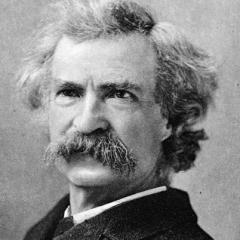
Mark Twain
Mark Twain, born Samuel Langhorne Clemens, was a renowned American author and humorist in the 19th century. His works are characterized by humor, satire, and profound social insight, with notable novels such as 'The Adventures of Tom Sawyer' and 'The Adventures of Huckleberry Finn'. more
You May Also Like
Source: Wanderer
“No nostalgia runs deeper than that for something one has never known and now cannot obtain.”
Source: Snobbery: The American Version
Source: If I lived my life again
“Every man deserves to be judged in the context of his times.”
“The North isn't a place. It's just a direction out of the South.”