Quotessence
Home / Quotes / Quote by Steven C. Hayes

Quote by Steven C. Hayes

“I want good science, and I want it to be realistically marketed. I wouldn't like only two countries on the planet that allow pharmaceutical companies to market directly to people, New Zealand and the United States. It ought to be better regulated. And when it's presented to people, it ought to be presented in a way that's realistic. For example, often people will prescribe antidepressant medications, and we'll say, you have a brain disease; you'll have to be on these medications permanently. There is no biological marker for depression. It's not true that we know that it's a brain disease.”

Quote by Steven C. Hayes

Author
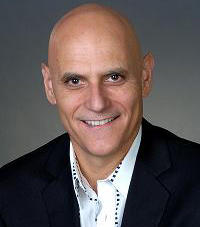
Steven C. Hayes
Steven C. Hayes

Limited information is available about Steven C. Hayes, who was born in 1948 and is of an unknown profession. more

You May Also Like

“The prescribers very often overstate, oversell, and the detail people are only too happy to tell them to do that. This idea that there's something wrong with your brain, and by the way, almost never are these antidepressant medications evaluated with what will happen if you're on them for three, four, five, 10, 15 years. Sometimes some of the side effects that come up come up only later, and sometimes they're very severe, even irreversible side effects.”

“Antidepressant medications, you still have some depressive thoughts. Antipsychotic medications, you still have some psychotic symptoms for the vast majority of the people taking them. But it gives them a little separation, and it doesn't control his behavior as much when you have a sad feeling, difficult thought, an odd perceptual experience. We can teach people those exact skills in therapy, you get longer-term benefits and without the side effects. So don't be sold just because a commercial interest wants to sell you things.”

“The government ought to help out, because the average citizen can't go out and be doing reviews of the scientific literature. And focus on the processes that have low side effects and good long-term outcomes. Right now you're going to find those in the psychosocial area, in the therapy area, in the empirically supported treatments such as ACT or cognitive behavior therapy, behavior therapy. And go there first rather than going to the pill bottle as if it's going to be the end of your journey. Very often it's only going to help, and even only to a minor degree, and more is going to be needed.”

“I think we're coming into a time where it has to do with how you stand in relationship to your own world within and in relationship to those around you in the world without. And I believe these are the things that we need to put into our schools, education, into our psychotherapy and into our culture more, finding a way to not be so harsh and judgmental, so objectifying and dehumanizing, constantly focused within and trying to get these difficult thoughts and feelings to go away.”

“Our children are exposed to 10, 20, 30 times the number of words that our great-grandfathers were exposed to. We're exposed in a single day or two to more horror on our Internet Web pages than our great-grandfathers were exposed to in decades of living. We have not created modern minds for that modern world. Science and technology has just dumped it on us. And I think people yearn for it. I think you see it in what's popular. Why are people wanting to learn about meditation and talking about a purpose-driven life? It's because they know more is needed in the modern world.”